Most AI influencer strategy is conceived and executed within the lifetime of a single creator’s career. The most ambitious brand architecture is conceived across generations — designed not just to outlast the creator’s active involvement but to outlast the creator’s lifetime entirely. The AI influencer multi generation brand strategy is the systematic architecture for building a digital influence dynasty: an entity with its own governance, its own narrative universe, its own financial ecosystem, and its own cultural legacy that compounds across decades rather than content cycles.
This is the most advanced stage of AI influencer brand development — where individual success is converted into institutional permanence. Where a character, a community, and a business model are designed to be inherited, evolved, and expanded by the generations who follow. Where the question shifts from “how long can I sustain this?” to “how do I build something that sustains itself indefinitely?”
This guide provides a complete framework for building a generational AI influencer dynasty — lineage architecture design, generational persona evolution, family governance protocols, wealth transfer mechanisms, cultural inheritance systems, asset compounding engines, philanthropy infrastructure, and eternal relevance engineering. It represents the ultimate expression of the long term growth roadmap — the architecture that transforms a brand from a business into a legacy institution.

AI Influencer Multi Generation Brand Strategy (Strategic Overview)
Generational brand thinking requires a fundamental shift in time horizon. Single-career strategy optimises for performance within a decade. Multi-generation strategy optimises for compounding value across centuries — building the infrastructure, the narrative depth, and the governance systems that allow a brand to survive and grow through the complete replacement of its original leadership.
Why generational planning strengthens long-term influence resilience
Single-creator brands are structurally fragile. They are dependent on the continuous engagement, health, interest, and availability of one individual — that dependency is the single point of failure preventing most creator brands from achieving institutional permanence.
Multi-generation brands distribute that dependency across systems rather than individuals. Governance structures, documented brand constitutions, distributed leadership hierarchies, and narrative ecosystems designed for evolution — these structural elements convert a creator brand from a sole-proprietor business into an institution with compounding longevity.
How dynasty architecture compounds brand equity over decades
Brand equity compounds across generations when three conditions are met simultaneously:
- Identity depth — The brand’s values, narrative, and archetype are defined deeply enough to survive format changes, cultural shifts, and leadership transitions without losing coherence
- Governance infrastructure — Decision-making systems that ensure the brand’s evolution is guided by documented principles rather than individual judgment alone
- Community investment — An audience that has developed genuine ownership psychology — feeling personally invested in the brand’s continuation across time
When all three are present, the brand generates new value each year even without active innovation — because the accumulated cultural significance, community loyalty, and IP portfolio appreciate independently.
Core strategic systems required to build perpetual digital influence
Five systems must be operational and compounding simultaneously for a multi-generation brand to achieve institutional permanence:
- Lineage architecture — Governance, ownership, and succession frameworks that ensure continuity
- Narrative universe — A story world deep enough to support multiple characters, eras, and audience relationships simultaneously
- Financial ecosystem — Diversified, compounding wealth architecture independent of any single individual’s active management
- Community institution — A fan culture so deeply embedded that it sustains itself with minimal creator input
- Cultural contribution — Philanthropy and institutional partnerships that make the brand a contributor to cultural value, not merely a commercial presence
Section takeaway: Dynasty strategy is not an extension of creator strategy — it is a different category of thinking. The shift is from optimising for the creator’s career to engineering for institutional permanence.
Lineage Architecture Design and Foundational Governance Systems
The governance system is the most important structural decision in multi-generation brand development. It determines how decisions are made, who makes them, how conflicts are resolved, and how the brand’s core identity is protected across transitions the original creator cannot control.
Structuring ownership frameworks that support multi-generation continuity
| Structure | Mechanism | Best For |
|---|---|---|
| Family trust | Assets held in trust for defined beneficiaries | Wealth continuity + IP protection |
| Corporate entity | Brand held by private company with defined shareholders | Business scalability + investment access |
| Foundation | Non-profit structure for philanthropic and cultural assets | Legacy and community authority |
| Hybrid model | Corporate entity + trust + foundation combined | Full dynasty architecture |
The hybrid model — a corporate entity for commercial brand operations, a trust for the IP and financial assets, and a foundation for the philanthropic legacy — provides the most comprehensive governance architecture for brands with genuine generational ambitions. An institutional legacy framework provides the foundational brand constitution that these governance structures are built on.
Defining leadership roles and succession pathways for brand stewardship
Dynasty leadership structure:
- Founder / Patriarch role — Strategic authority and brand constitution custody during active involvement
- Creative Director succession — Pre-defined successor responsible for narrative and character direction
- Brand Steward Board — Collective oversight body ensuring brand decisions align with the documented brand constitution
- Operational leadership — Professional management team independent of family or founding member involvement
Succession pathways must be documented in the brand constitution before they are needed — not designed reactively when a transition becomes urgent.
Aligning governance principles with long-term cultural and financial goals
Governance framework checklist:
- ✅ Brand constitution documented with values, narrative rules, visual standards, and commercial principles
- ✅ Succession plan for each key leadership role completed and legally documented
- ✅ Ownership transition mechanisms defined in legal instruments (trust, shareholder agreements)
- ✅ Dispute resolution process established for governance conflicts
- ✅ Annual governance review process scheduled and resourced
- ✅ Next-generation leadership development programme established
Section takeaway: Governance infrastructure is the most time-sensitive structural investment in dynasty brand development. The complexity of ownership transfer, IP succession, and decision-making authority requires years of careful design — not weeks of reactive assembly.
Generational Persona Evolution and Narrative Continuity Frameworks
A single AI character — however compelling — has a finite cultural lifespan. Multi-generation brands build narrative universes rather than individual characters: interconnected story worlds that can introduce, evolve, and retire characters while maintaining the continuous brand identity that sustains audience investment across generations. The creator reinvention system that manages individual career reinvention becomes, at the dynasty scale, a systematic universe expansion programme.
Designing new influencer personas that extend brand storytelling across eras
Generational persona expansion model:
- Primary character — The founding figure whose archetype, values, and narrative establish the brand’s identity
- Legacy generation — Characters positioned as the primary figure’s narrative inheritors — carrying forward the values while introducing new perspectives relevant to the next cultural era
- Adjacent characters — Figures who expand the universe’s scope without competing with the primary figure’s positioning
- Community characters — Fan-originated figures formally integrated into the universe, creating co-ownership of the narrative
Each generation of characters introduces new audience cohorts while maintaining continuity for the existing community — expanding the brand’s total addressable audience without abandoning the foundation that built it.
Maintaining identity coherence while adapting to cultural shifts
Identity coherence framework:
- Fixed elements — Core archetype, foundational values, visual identity system, universe mythology
- Evolved elements — Cultural tone, content format, platform emphasis, narrative themes
- Retired elements — Specific references, era-specific aesthetics, platform-specific formats that become culturally dated
The audience recognises the brand’s identity across each evolution — because what is fixed is who the brand is, and what evolves is how that identity is expressed.
Building narrative bridges that preserve audience recognition
Narrative bridge design:
- Explicit in-universe references to previous characters and narrative arcs that create continuity for long-term audience members
- Archive content strategy: the universe’s historical content is preserved and accessible, providing the depth that makes the universe feel genuinely significant
- Anniversary events: annual cultural moments celebrating the universe’s history and renewing community investment
- Cross-era collaboration content: characters from different narrative periods interacting in ways that reinforce the universe’s temporal depth

Section takeaway: Universe architecture — not individual character depth — is the narrative infrastructure that makes multi-generational continuity structurally possible. Begin universe design before any single character reaches peak cultural significance.
Family Governance Protocols and Organisational Development Models
When multi-generation brands involve family stewardship — the most natural form of generational continuity — governance protocols must address both the commercial and the interpersonal dimensions of shared leadership.
Establishing decision-making structures for collaborative brand management
Family governance decision framework:
- Major brand direction decisions: require supermajority of Brand Steward Board
- Commercial partnership decisions above defined threshold: require Board approval
- Character and narrative evolution decisions: require Creative Director authority with Board review
- Routine operational decisions: delegated to professional management
Clear decision authority prevents the most common family governance failure: ambiguous authority that produces conflict rather than coordination.
Implementing operational systems that ensure accountability and transparency
Governance accountability systems:
- Monthly operational reporting: financial performance, audience metrics, and IP management status
- Quarterly governance review: brand constitution adherence assessment and strategic direction review
- Annual family council: all stakeholders convene to review long-term alignment and succession planning status
- Independent advisory board: external advisors providing perspective without family dynamics bias
Preparing leadership training pathways for future generations
The transmission of brand stewardship knowledge is as important as the transmission of financial assets. Without this knowledge transfer, inherited brand authority is exercised without the strategic foundation that produced it.
Leadership development programme:
- Apprenticeship phase: next-generation leaders work alongside current leadership before taking independent authority
- Documented brand history curriculum: structured education in the brand’s decisions, rationale, and outcomes
- Mentorship council: access to the founding generation’s advisors and peer network
- Graduated authority: increasing decision-making responsibility as competence and alignment are demonstrated
Wealth Transfer Mechanisms and Financial Continuity Strategies
The financial dimension of multi-generation brand strategy requires the same institutional discipline applied to the governance and narrative dimensions. Wealth not structured for transfer is frequently dissipated within one to two generations — regardless of its original magnitude.
Structuring inheritance models that preserve investment momentum
Dynasty wealth transfer framework:
- Generation 1 (Founding) — Accumulate, diversify, and document: build the wealth architecture that subsequent generations will manage
- Generation 2 (Stewardship) — Maintain and compound: preserve the portfolio disciplines established in Generation 1 while introducing next-generation leadership
- Generation 3+ (Expansion) — Expand and evolve: build on the compounding foundation with the strategic sophistication developed across multiple generations
The most common dynasty wealth failure occurs at the Generation 2 to Generation 3 transition — when the founders’ discipline is not successfully transmitted. Addressing this in the governance framework prevents the most common form of dynasty dissolution.
Creating diversified portfolios aligned with dynastic objectives
Dynasty portfolio allocation framework:
- Brand operating capital (15–25%): funds active creator ventures, content production, and community infrastructure
- IP and real asset base (20–30%): appreciating assets that compound independently of active management
- Diversified financial portfolio (30–40%): market-rate compounding assets for long-term wealth preservation
- Philanthropic endowment (10–15%): permanent capital supporting the brand’s cultural contribution programmes
- Liquidity reserve (5–10%): accessible capital for unexpected transitions and opportunities
Balancing liquidity needs with long-term asset growth planning
Dynasty financial planning requires a distinctly longer time horizon than standard investment management. Illiquid assets — real estate, private equity, IP portfolios, and long-term brand investments — typically offer the highest long-term returns but require a liquidity management strategy that ensures current operational needs are met without forcing premature liquidation of compounding assets.
Cultural Inheritance and Cross-Generational Audience Engagement
The cultural dimension of multi-generation brand building — sustaining meaningful audience relationships across the demographic shifts that occur over decades — is the most nuanced challenge in dynasty strategy.
Preserving brand traditions that strengthen emotional audience connection
Cultural traditions are the mechanisms through which brands sustain emotional relevance across audience cohorts with no direct connection to the brand’s origins. A well-developed community influence ecosystem develops the community infrastructure through which these traditions are maintained and transmitted.
Brand tradition preservation framework:
- Annual milestone events: recurring celebrations marking the brand’s cultural history and inviting new community members into the collective memory
- Archive access programme: structured access to the brand’s complete narrative history for members who want to understand the tradition they are part of
- Community elder recognition: long-term members whose tenure is publicly acknowledged and whose role as cultural carriers is formally recognised
- Cross-generational mentorship: structured connection between early community members and new joiners, transmitting cultural knowledge organically
Designing rituals that sustain loyalty across demographic shifts
Cross-generational ritual evolution framework:
- Core ritual structure preserved (the annual event, the weekly anchor content, the character milestone celebration)
- Cultural reference layer updated to incorporate references relevant to each incoming demographic cohort
- Intergenerational participation designed: moments where early community members and new joiners interact within the same ritual space
- Archive integration: new rituals reference the brand’s historical moments, creating continuity and significance for newcomers
Aligning storytelling themes with evolving cultural expectations
The themes that sustain cultural relevance across generations are the timeless themes that carry meaning regardless of the specific cultural context: identity, aspiration, belonging, growth, excellence, and purpose. A brand whose narrative is anchored to these themes can adapt its surface expression across cultural eras without losing the deeper relevance that sustains multi-generational audience investment.
Asset Compounding Engines and Strategic Investment Expansion
A dynasty brand is also a dynasty business — and the business model must generate compounding returns across generations, not just within any single leadership period.
Reinvesting profits into scalable creator ventures and media assets
According to long term creator growth insights, creator brands that build structured reinvestment programmes consistently achieve 3–5× higher total asset values over decade-long periods than those managing profits without a compounding architecture.
Dynasty investment compounding model:
- Stage 1: Primary brand profits fund initial venture studio operations
- Stage 2: Venture studio exits fund the IP portfolio expansion and financial asset base
- Stage 3: Financial asset income funds philanthropy endowment and community infrastructure
- Stage 4: Full self-funding dynasty — all components generate and recycle their own compounding returns
Leveraging performance analytics to optimise capital deployment
Dynasty analytics priorities:
- IP portfolio value trajectory: annual assessment of licensed asset value appreciation
- Community depth metrics: long-term audience relationship quality indicators (contribution rate, retention cohort analysis, cross-generational engagement)
- Brand cultural relevance index: media mention quality, institutional partnership tier, and academic or cultural reference rate
- Venture portfolio compounding rate: total return on venture investments relative to passive market alternatives
Building financial flywheels that sustain dynastic growth
Dynasty financial flywheel:
- Primary brand generates cultural authority and community loyalty
- Cultural authority attracts premium institutional partnerships and IP licensing
- IP licensing and partnership income funds venture studio operations
- Venture studio exits compound the financial portfolio
- Financial portfolio income funds philanthropy and community infrastructure
- Philanthropy and community investment reinforce cultural authority and institutional positioning
- Cycle repeats at growing scale with each generation
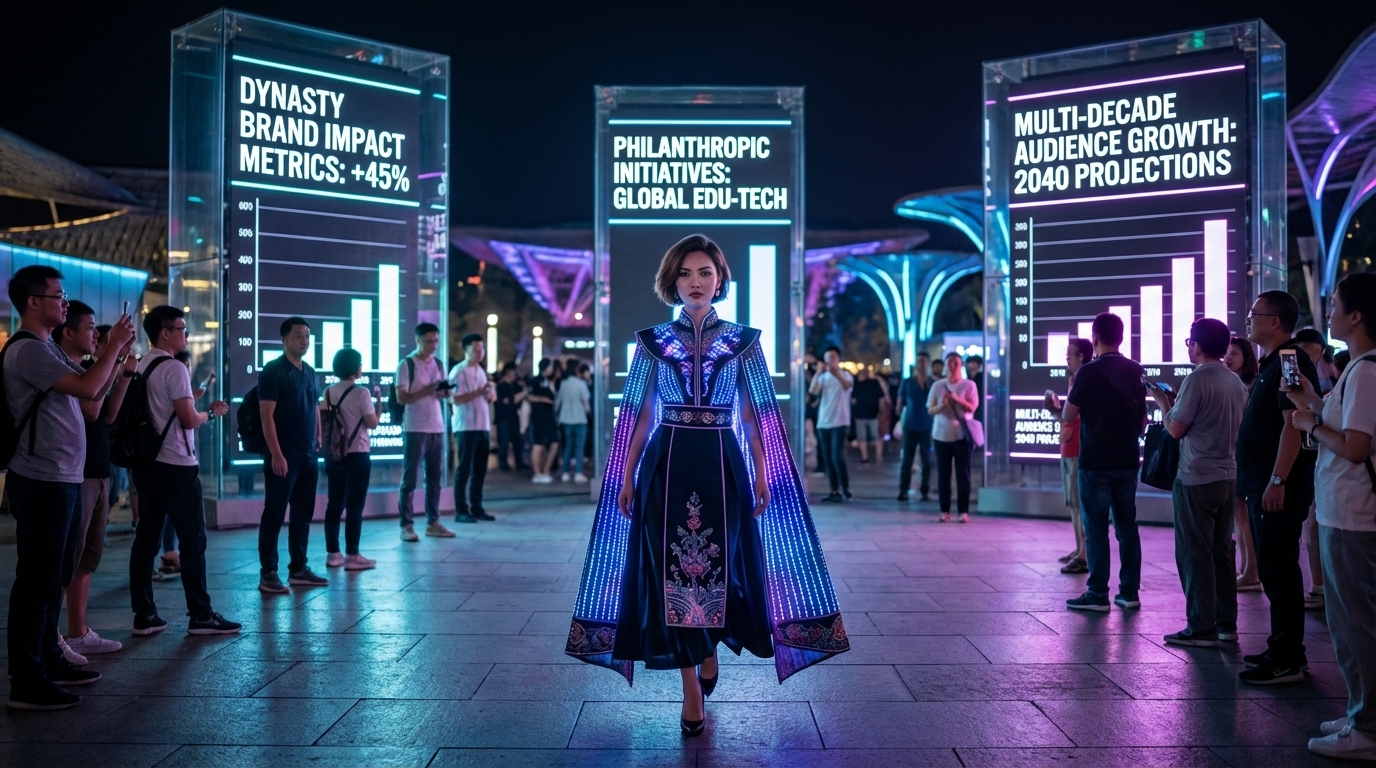
Section takeaway: Dynasty financial architecture is self-funding at Stage 4. The investment in reaching Stage 4 — through deliberate compounding cycle design — is the highest-return capital decision in dynasty brand development.
Philanthropy Infrastructure and Institutional Authority Building
Legacy brands that achieve multi-generational institutional status are perceived as contributors to cultural value — organisations whose commercial success is matched by their cultural contribution. Philanthropy infrastructure is a structural component of the institutional authority that makes the brand’s cultural significance durable.
Aligning brand initiatives with long-term social and cultural contributions
Philanthropic focus framework:
- Primary cause: the social or cultural cause most directly aligned with the brand’s niche and community values
- Education initiative: a programme that develops expertise in the brand’s domain within broader communities
- Creator development: support for emerging creators in the brand’s niche — building the ecosystem that the brand benefits from
- Cultural preservation: documentation and preservation of the community’s history and cultural contributions
Strengthening public credibility through consistent community impact programmes
Institutional trust is built through sustained, documented commitment — not through individual charitable acts. An annual impact report that transparently documents the brand’s philanthropic investments, outcomes achieved, and community members impacted creates the accountability record that institutional partnerships and media coverage reward.
Leveraging partnerships to reinforce institutional legitimacy
Institutional partnership development for dynasty brands:
- Academic partnerships: research collaboration, guest faculty roles, or curriculum development with recognised universities
- Cultural institution alignment: partnerships with museums, libraries, or cultural archives for exhibition or documentation
- Media institution collaborations: joint content production with established editorial standards for audiences beyond the creator economy
- Government or public sector engagement: advisory roles, public commissions, or cultural recognition
According to institutional brand benchmarks, creator brands with documented institutional partnerships and philanthropic programmes command 3–8× higher brand deal values and significantly longer average partnership durations than comparable accounts without institutional positioning.
Algorithm Sovereignty and Platform Independence Strategies
A dynasty brand that remains algorithmically dependent on social media platforms has a fundamental structural vulnerability. Achieving algorithm sovereignty — where a significant proportion of audience reach and revenue is independent of any platform’s distribution decisions — is the infrastructure condition for genuine multi-generational resilience.
Designing diversified distribution channels that ensure influence continuity
Algorithm sovereignty architecture:
- Email list as primary owned audience channel: the dynasty’s ability to communicate directly with its audience independent of any platform
- Community platform: an owned gathering space where the community exists independently of social media algorithms
- Website and content archive: SEO-driven discovery and the repository of the brand’s complete narrative history
- Podcast: a long-form owned audio channel independent of video platform distribution
- Physical presence: events, merchandise, and real-world brand expressions that exist entirely outside digital platforms
Target: minimum 50% of total reach generated through owned and earned channels at the dynasty stage.
Implementing analytics systems that anticipate ecosystem performance risks
Dynasty resilience monitoring:
- Annual owned audience as a percentage of total reach: tracks algorithm independence progress
- Platform revenue concentration: ensures no single platform exceeds 25% of total brand revenue
- Community contribution rate: tracks the percentage of community actively generating content and advocacy
- Brand search volume: monitors organic brand discovery independent of algorithmic distribution
Building resilience frameworks that adapt to technological evolution
Technological resilience framework:
- Platform monitoring: systems identifying emerging platforms and distribution formats early in their adoption curve
- Rapid deployment capacity: defined processes for establishing brand presence on new platforms within 30 days
- Format adaptation capability: documented production frameworks adaptable to new content format requirements
- Archive first approach: all brand content preserved in creator-owned formats independent of platform-specific formats
Eternal Relevance Engineering and Long-Term Brand Evolution Systems
Dynasty brands do not remain static — they evolve continuously, guided by the governance systems and identity frameworks that protect their continuity. Eternal relevance is not preservation of what was; it is the systematic management of evolution in service of what endures.
Maintaining strategic innovation cycles that sustain cultural visibility
Innovation cycle structure for dynasty brands:
- Generational content evolution: each decade introduces new content categories, formats, or narrative themes aligned with the emerging culture
- Character evolution arcs: planned narrative development keeping existing characters’ stories active and evolving
- Universe expansion events: major narrative or character introductions that generate renewed cultural conversation
- Technology adoption: early adoption of new content technologies demonstrating cultural forward-thinking
Balancing legacy preservation with emerging market opportunities
Legacy-emergence balance framework:
- Annual allocation assessment: what proportion of creative and financial investment is directed toward existing narrative depth vs. new opportunity development
- Community consultation: major legacy vs. emergence decisions incorporate structured community input
- Pilot programme design: new directions piloted within contained community contexts before full-scale deployment, reducing the risk of emergence undermining legacy value
Designing frameworks that enable adaptive growth across generations
Adaptive growth framework:
- Defined adaptation criteria: what types of change the brand will accommodate and what types it will not
- Change management protocols: structured processes for implementing significant brand evolution with community engagement
- Identity stress tests: regular assessment of whether proposed adaptations maintain or erode the brand’s core identity coherence
- Reversibility planning: for significant innovations, defined criteria for reverting if the adaptation undermines more than it creates
Common Mistakes in Multi-Generation Brand Planning
The most damaging errors in dynasty brand development are structural failures that create fragility in the systems designed for permanence.
Failing to formalise governance structures early in brand development
The governance infrastructure a dynasty brand requires cannot be assembled reactively when the need becomes urgent. The complexity of ownership transfer, IP succession, and decision-making authority requires years of careful legal and organisational design. Creators who defer governance formalisation until a transition is imminent consistently encounter complications that earlier structural investment would have prevented.
Over-relying on single personas instead of scalable narrative ecosystems
A dynasty built on a single character — without a universe capable of accommodating succession, evolution, and expansion — is structurally limited. When that character’s cultural relevance declines or its narrative arc reaches a natural conclusion, the brand has no mechanism for continuation. Universe architecture must begin early enough to establish the narrative depth that generational continuity requires.
Neglecting financial diversification required for long-term sustainability
Dynasty wealth concentrated in the brand’s commercial operations — without the diversified financial portfolio, IP asset base, and philanthropy infrastructure that provide compounding returns independent of active management — is vulnerable to operational disruption. Financial diversification at the dynasty scale is not optional — it is the economic condition for multi-generational commercial continuity.
Future Trends in AI Influencer Dynasty Building
Three structural developments will define the AI influencer dynasty landscape over the next decade.
Rise of creator-led family media institutions and entertainment networks
The most advanced AI influencer dynasty brands will transition from creator brands into family-led media institutions — organisations with multiple character properties, multiple content channels, educational divisions, philanthropic foundations, and entertainment productions that function as the media companies of the creator economy era.
Integration of digital ownership technologies into generational brand systems
Blockchain-based ownership technologies — smart contract IP licensing, tokenised community ownership, and on-chain asset management — will provide new mechanisms for implementing the community ownership and IP continuity systems that dynasty brands require. These technologies will make generational asset transfer more transparent, more secure, and more efficiently governed than traditional legal structures allow.
Evolution of influencer brands into global cultural heritage assets
The AI influencer brands that achieve genuine institutional permanence over the next several decades will transition from commercial entities into recognised cultural heritage assets — brands whose cultural significance is acknowledged by institutions, governments, and cultural archives in the way that significant entertainment and media brands have been recognised across previous generations.
Frequently Asked Questions
How do AI influencers build multi-generation brands?
Multi-generation brand building requires five simultaneous systems: lineage architecture (governance, ownership, and succession frameworks), a narrative universe (story world deep enough for multiple characters and eras), a financial ecosystem (diversified, compounding wealth architecture), a community institution (fan culture that sustains itself independently), and cultural contribution infrastructure (philanthropy and institutional partnerships). The transition from single-generation brand to dynasty occurs when these systems collectively generate value independent of any individual’s direct involvement.
What strategies sustain digital influence across decades?
Multi-decade influence is sustained by combining depth of identity (a narrative and values architecture deep enough to survive cultural shifts), governance infrastructure (documented systems that guide evolution without requiring individual judgment at every decision point), community ownership investment (an audience personally invested in the brand’s continuation), and consistent philanthropic or cultural contribution positioning. No single strategy sustains influence across decades — it is the compounding output of all systems maintained consistently over time.
Can virtual personas be inherited or evolved over time?
Yes — this is one of the structural advantages that AI influencer brands have over human creator brands. An AI character’s visual identity, narrative voice, values, and personality exist in documented, reproducible form that can be maintained, evolved, and succeeded by new stewards. The character does not retire with its creator — it continues under new custodianship guided by the brand constitution the original creator established.
How does dynasty planning affect long-term monetisation potential?
Dynasty planning dramatically increases long-term monetisation potential across every revenue category. IP licensing creates income streams compounding independently of active content production. Institutional brand partnerships generate higher deal values and longer contract terms. Community membership revenue compounds as brand history deepens audience investment. The commercial multiple of dynasty-level positioning over standard influencer positioning is 5–20× at equivalent audience sizes — because the dynasty generates value the individual creator alone cannot.
Conclusion — Creating Enduring Digital Influence Through Generational Strategy
The AI influencer multi generation brand strategy outlined in this guide is the most ambitious expression of AI influencer brand development — the architecture for converting individual success into dynastic permanence. Every system described — lineage architecture, generational persona evolution, family governance, wealth transfer, cultural inheritance, asset compounding, philanthropy infrastructure, algorithm sovereignty, and eternal relevance engineering — contributes to an institution that compounds in cultural significance, community depth, and commercial value with each passing generation.
The creators who build genuine digital dynasties are not those who built the most successful individual careers. They are those who understood that the most valuable thing they could build was not a brand, but an institution — a structure designed to outlast them, to evolve beyond their vision, and to compound the value of what they started across generations they will never meet.
Build the institution. Design the succession. Invest in the legacy. The result is not just a brand dynasty — it is a contribution to digital culture that endures.
Next Step in Your AI Influencer Growth Journey
Once the multi-generation dynasty architecture is established, the next strategic consideration is how to position the brand institution within the broader media landscape — developing the editorial authority, distribution relationships, and content partnerships that give the brand institutional media credibility.
👉 Coming next: AI Influencer Institutional Media Strategy — how to transition from creator brand to institutional media entity, develop editorial authority, and build the media infrastructure that gives a dynasty brand the reach and credibility of established media organisations.
Continue Learning
Explore the full AI influencer strategy ecosystem:
- 🗺️ Long Term Growth Roadmap — The complete strategic framework for building a compounding AI influencer business
- 🔄 Creator Reinvention System — Master the persona evolution principles that dynasty-scale narrative universe expansion is built on
- 🏛️ Institutional Legacy Framework — Build the brand constitution and authority infrastructure that dynasty governance structures require
- 🤝 Community Influence Ecosystem — Develop the fan culture and community infrastructure that sustains cross-generational loyalty