
AI podcast tools for beginners have completely changed how new creators start a podcast in 2026.
Starting a podcast used to mean investing in expensive microphones, soundproofed rooms, and hours learning audio editing software, soundproofed rooms, and hours learning audio editing software. In 2026, AI has changed that completely.
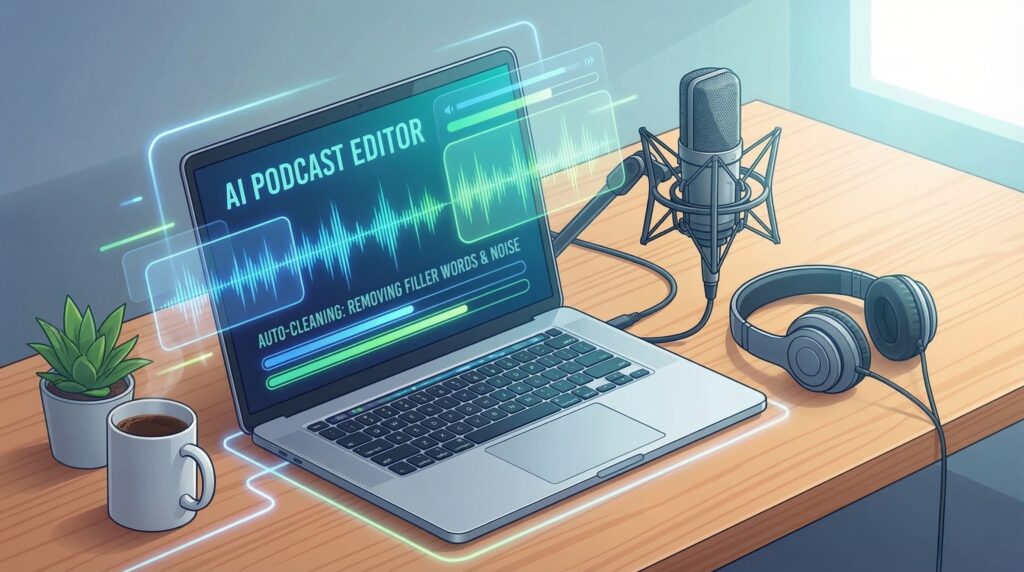
Today’s AI podcast tools handle the technical side automatically — removing background noise, cutting out filler words, balancing audio levels, and generating transcripts for show notes. Beginners can now record a conversation and publish a professional-sounding episode the same day.
What makes AI podcast software for beginners so powerful is how much it compresses the learning curve. Tasks that once required professional training — noise gating, EQ adjustments, loudness normalization — now happen automatically in the background. You don’t need to know how they work. You just need to press record.
This guide covers 10 of the best AI tools for beginner podcasters in 2026 — what each one does, who it’s built for, and how you can use it to launch your show without any prior audio production experience.
Why AI Podcast Tools for Beginners Are Changing Podcast Creation
AI podcast tools for beginners are transforming podcast production podcast production by automating the parts that used to require professional skills and expensive software. For beginners, this shift removes almost every technical barrier to getting started.
How AI helps beginners start a podcast
Before AI podcast production tools existed, a beginner had to learn multitrack editing, audio compression, noise gating, and EQ settings just to produce a listenable episode.
Modern AI podcast editing tools abstract all of that away. You focus on the conversation — the AI handles the production.
Podcast production tasks AI can automate
AI audio editing tools can now manage a wide range of podcast production tasks:
- Background noise and room echo removal
- Filler word detection and deletion (um, uh, you know)
- Audio level normalization across speakers
- Automatic transcription for show notes and captions
- Episode chapter generation from transcript
- Social media clip creation from episode highlights
Why creators use AI for audio editing
Even experienced podcasters are turning to AI audio editing tools because they save hours per episode. For beginners, the benefit is even greater.
AI podcast editing tools make it possible to produce quality audio without years of practice or an expensive studio. The result is more time spent on content, interviews, and audience building.
If you also create video content, you may want to explore AI tools for beginner video creators.
What Makes a Good AI Podcast Tool for Beginners
With dozens of AI podcast software options available, beginners need to know what to look for. The best tools share a few key qualities that make the learning process smooth and the results reliable.
Simple recording and editing workflow
The best beginner AI podcast tools reduce editing to a few clicks. Look for platforms that guide you through recording and editing step by step, rather than presenting a complex dashboard that requires prior audio knowledge.
Ideally, the tool should handle most editing decisions automatically, leaving you to review and approve rather than manually adjust every setting.
AI-powered noise removal and audio cleanup
Clean audio is the single most important quality factor for podcasts. Listeners will tolerate imperfect content but will stop listening the moment audio becomes distracting.
Look for tools with one-click noise removal, echo reduction, and automatic volume leveling. These features alone can transform a bedroom recording into something that sounds professionally produced.
Affordable or free pricing plans
Most beginner podcasters aren’t generating revenue from day one. The best AI podcast software for beginners offers free tiers or low-cost plans without a financial commitment.
Look for:
- Free plans with at least 1–2 hours of monthly audio processing
- Affordable paid plans under $30 per month
- No long-term contracts — month-to-month flexibility
Integration with podcast hosting platforms
A good AI podcast tool shouldn’t exist in isolation. The best platforms either include built-in hosting or integrate directly with Spotify, Apple Podcasts, and RSS.fm.
Seamless integration means you can go from recording to publishing in one workflow, without manually exporting and uploading files across multiple platforms.
10 Best AI Tools for Beginner Podcasters
The following tools represent the best AI podcast production tools available to beginners in 2026. Each has been selected for its ease of use, audio quality results, and accessibility to creators just starting out.
1. Descript
Descript is one of the most versatile AI podcast editing tools available. It turns your audio into a text transcript and lets you edit the podcast by editing the text — delete a sentence from the transcript and it disappears from the audio.
Key features for beginners include:
- Automatic transcription with high accuracy
- Filler word removal with one click
- Studio Sound — AI audio enhancement that makes any mic sound professional
- Overdub — AI voice cloning for fixing mistakes without re-recording
Descript is ideal for podcasters who feel more comfortable working with text than audio waveforms. Its free plan supports up to one hour of transcription per month.
2. Riverside
Riverside is the leading tool for recording remote podcast interviews in high quality. Unlike video call platforms like Zoom, Riverside records each participant’s audio and video locally — so poor internet connections don’t affect recording quality.
For beginners doing interview-format podcasts, Riverside solves the biggest technical challenge: getting clean audio from remote guests. It also includes AI transcription, automatic speaker labels, and magic clips for social media repurposing.
3. Adobe Podcast AI
Adobe Podcast AI offers one of the most impressive audio cleanup tools available to beginners. Upload any recording and its AI removes background noise, reduces echo, and enhances voice clarity to broadcast quality.
The Enhance Speech tool is available for free and processes audio in minutes. For beginners recording in home offices, apartments, or shared spaces, Adobe Podcast AI delivers a dramatic improvement with no effort required.
4. Alitu
Alitu is designed from the ground up for beginner podcasters who want to automate as much of the production process as possible. It handles recording, audio cleanup, episode building, and publishing in one platform.
Standout features include:
- Automatic noise reduction and audio leveling on every recording
- Drag-and-drop episode builder with music and intro/outro support
- Built-in podcast hosting with RSS feed generation
- Automatic transcription and show note creation
Alitu is more of an all-in-one AI podcast production tool than a standalone editor, making it one of the best choices for complete beginners who want one platform for everything.
5. Podcastle
Podcastle is a browser-based recording and editing platform with strong AI features. Its Magic Dust audio enhancement automatically improves audio quality, and its AI transcription generates accurate show notes and captions.
Podcastle also offers an AI voice feature for generating realistic narration — useful for solo podcasters who want to create content without recording everything themselves. Its free plan supports up to three hours of recording per month.
6. Auphonic
Auphonic is the industry standard for automated audio post-production. It specializes in audio leveling, noise reduction, loudness normalization, and encoding — the technical finishing touches that make a podcast sound polished.
Upload your recording and Auphonic automatically corrects inconsistent levels between speakers, volume issues, and encoding formats. It integrates directly with major podcast hosts and offers two hours of free audio processing per month.
7. Cleanvoice AI
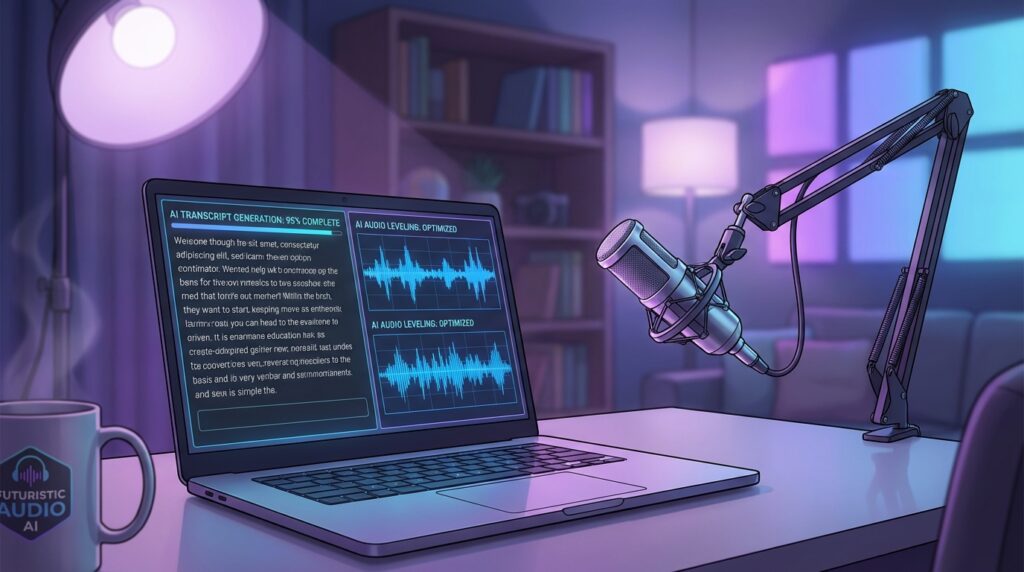
Cleanvoice AI focuses on a single task — removing everything that makes recorded speech sound unpolished. It automatically detects and removes:
- Filler words (um, uh, like, you know)
- Mouth sounds and lip smacks
- Stutters and false starts
- Long silences between sentences
For beginners who record naturally conversational audio with lots of verbal tics, Cleanvoice can dramatically reduce editing time. It processes audio faster than real time and delivers a cleaned file ready for final production.
8. Wondercraft AI
Wondercraft AI is a text-to-podcast platform that allows creators to produce entire episodes from a written script without recording a single word. Choose from realistic AI voices, paste your script, and Wondercraft generates a complete narrated episode.
It’s particularly valuable for beginners who struggle with the consistency of recording — whether due to schedule constraints, self-consciousness about their voice, or simply a preference for writing over speaking.
9. Murf AI
Murf AI is a professional AI voice generation platform used by podcasters, educators, and content creators to produce narrated audio at scale. With over 120 AI voices across 20 languages, Murf gives beginners the ability to produce polished narration without a microphone.
Key features include:
- 120+ realistic AI voices with natural pacing and intonation
- Voice customization — adjust speed, pitch, and emphasis
- Script editor with real-time audio preview
- Background music and sound effect integration
Murf is best suited for narration-heavy formats like news briefings, educational content, and solo commentary shows.
10. Anchor (Spotify for Podcasters)
Anchor, now rebranded as Spotify for Podcasters, is the most accessible all-in-one podcast platform for beginners. It’s completely free and handles recording, basic editing, hosting, and distribution to all major platforms in one place.
While its AI features are less advanced than dedicated tools like Descript or Auphonic, Anchor’s simplicity and zero cost make it the natural starting point for many beginners. You can record on your phone and publish to Spotify and Apple Podcasts in minutes.
How Beginners Can Launch a Podcast Using AI Tools
Knowing which tools exist is one thing — understanding how to combine them into a practical workflow is what gets your first episode published. Here’s a simple AI-powered process from idea to publication.
Writing a podcast script with AI
Start by using an AI writing assistant to draft your episode outline or full script. Tools like ChatGPT or Claude can generate structured episode frameworks, interview questions, and intro/outro scripts in minutes.
Even if you prefer to speak conversationally, a structured outline prevents rambling and keeps your episode focused — which means less editing later.
Recording audio with beginner-friendly tools
For solo episodes or in-person interviews, Alitu or Podcastle offer straightforward browser-based recording that captures clean audio without any setup. For remote interviews, Riverside is the go-to choice for maintaining quality across locations.
Don’t wait for perfect equipment. A decent USB microphone in a quiet room produces more than acceptable audio — especially once AI audio editing tools process the recording.
Using AI to clean and edit audio automatically
Once recorded, run your audio through your chosen AI podcast editing tool. A simple beginner workflow:
- Upload to Adobe Podcast AI Enhance Speech for noise removal
- Process through Cleanvoice AI to remove filler words and silence
- Normalize levels in Auphonic to meet podcast loudness standards
- Use Descript to review the transcript and make any final content edits
This four-step process takes under 30 minutes and produces a professional-sounding episode from an average home recording.
Publishing episodes to podcast platforms
Once editing is complete, upload your episode to your hosting platform. If you’re using Alitu or Anchor, publishing is built into the same platform as recording.
Most podcast hosts distribute automatically to Spotify, Apple Podcasts, Amazon Music, and other directories — one upload reaches all your listeners.
Tips for New Podcasters Using AI Tools
Getting started with AI podcast software is straightforward. A few practical habits will help you produce better content faster and avoid the most common beginner mistakes.
Start with simple recording setups
Don’t let gear research delay your first episode. A USB microphone ($50–$100), a quiet room, and a free recording tool are all you need to get started. AI cleanup tools handle the audio issues that come from imperfect recording environments.
Record a test episode, run it through Adobe Podcast AI or Auphonic, and listen back. You’ll be surprised how professional even a basic setup can sound after AI processing.
Use AI tools to reduce editing time
The biggest mistake new podcasters make is spending too much time editing. Set a time limit for each episode’s editing session and let AI podcast editing tools handle the rest.
Cleanvoice handles filler words, Auphonic handles levels, and Descript handles content edits. Your job is to review — not to manually cut every pause and stumble.
Focus on clear audio quality
AI audio editing tools work best when the source audio is reasonable to begin with. A few habits that make a real difference:
- Record in small, soft-furnished rooms (closets work surprisingly well)
- Keep the microphone 6–8 inches from your mouth
- Turn off fans, air conditioners, and notifications before recording
- Do a 30-second test recording before every session
Use AI transcription for show notes
Show notes improve discoverability and give listeners a reason to visit your website. Use the automatic transcription from Descript or Podcastle to generate a draft instantly.
Edit the transcript to highlight key points, add timestamps, and include links mentioned in the episode. This turns a time-consuming chore into a five-minute task.
If you’re producing content across multiple formats, AI tools can extend your workflow well beyond audio. Many podcasters also repurpose episodes as short video clips for social media — a process made much easier with the right tools. For a full breakdown of what’s available, see our guide to AI tools for beginner video creators, which covers the best platforms for editing, captioning, and repurposing video content in 2026.
Frequently Asked Questions
Here are answers to the most common questions beginner podcasters have about AI podcast software and editing tools.
What are the best AI tools for beginner podcasters?
The best AI podcast production tools depend on your format. For an all-in-one platform, Alitu or Anchor are the top choices. For audio quality, Adobe Podcast AI and Auphonic are outstanding. For editing flexibility, Descript is unmatched. For remote interviews, Riverside is the clear leader.
Are there free AI tools for podcast editing?
Yes — several excellent AI podcast editing tools are free at the basic level:
- Adobe Podcast AI Enhance Speech — free with no time limits
- Anchor (Spotify for Podcasters) — completely free including hosting
- Auphonic — two free hours of audio processing per month
- Descript — free plan includes one hour of transcription per month
- Podcastle — free plan supports up to three hours of recording per month
Can AI automatically edit podcast audio?
Yes. AI podcast editing tools like Alitu and Cleanvoice AI automatically remove silences, filler words, and background noise with minimal human input. Auphonic automatically corrects audio levels and normalizes loudness to platform standards.
While a human review pass is still recommended for content edits, AI handles the majority of technical editing automatically.
Which AI tool is easiest for starting a podcast?
Anchor (Spotify for Podcasters) is the easiest starting point — it’s free, works on mobile, handles recording and hosting, and distributes to all major platforms automatically. For slightly more production quality, Alitu offers a guided workflow with built-in AI audio cleanup.
Choosing the Right AI Podcast Tool to Get Started
AI has genuinely leveled the playing field for podcast production. In 2026, a beginner with a modest microphone and one of the AI podcast production tools in this guide can produce episodes that sound as good as shows with dedicated production teams.
The best approach is to start with the simplest tool that gets you publishing. For most beginners, that means Anchor for hosting and Adobe Podcast AI for audio cleanup — both free, both requiring minimal setup.
As your show grows, layer in more specialized AI podcast software. Add Riverside when you start doing remote interviews. Add Descript when you want more editing control. Add Auphonic when you care about hitting professional loudness standards.
The most important thing is to publish your first episode. AI will handle the production complexity. Your job is to show up, speak clearly, and share something worth hearing.