
Most creators pick a niche by instinct and hope it works. The ones who build profitable accounts pick a niche by design — and then execute against a plan. That difference, made in the first week, determines whether an account grows into a business or stalls after a promising start.
AI influencer niche ideas are not in short supply. The harder problem is knowing which ideas are commercially viable, algorithmically rewarded, and sustainable to produce over a long period. In 2026, with virtual influencer accounts competing for attention on every major platform, the gap between a well-chosen niche and a poorly chosen one has never been more consequential. Creators who approach this decision with a framework consistently outperform those who follow what currently appears to be trending.
This guide provides a complete strategic process for evaluating, selecting, and validating a profitable AI influencer niche — including a profitability scoring system, a five-step selection matrix, and a 30-day validation plan. If you are ready to start an AI influencer journey, niche selection is the decision that shapes everything that follows.
AI Influencer Niche Ideas: Why the Right Direction Changes Everything
Not all niches offer equal earning potential, audience depth, or algorithmic reward. Understanding the economics of different content categories before committing is the foundation of any profitable positioning strategy.
How niche clarity improves algorithm reach
Platform algorithms are classification engines. They identify what content is about, match it to audiences likely to engage, and distribute accordingly. Accounts with a clearly defined niche receive more accurate and consistent distribution because the algorithm can categorise them with confidence.
Accounts that post across unrelated topics confuse that process. The result is inconsistent reach and slower growth — regardless of content quality. According to choosing a social media niche research, accounts that maintain consistent topical focus grow significantly faster than unfocused accounts at the same posting volume. Niche clarity is not a creative limitation. It is an algorithmic advantage.
Why monetisation potential varies by industry
Brand advertising budgets are not distributed evenly across content categories. Industries with high consumer spending — finance, health, beauty, technology — allocate substantially larger influencer marketing budgets than entertainment or general lifestyle categories. An AI influencer in the personal finance space can command meaningfully higher brand partnership rates than an account of the same size in a lower-spend niche.
Understanding these industry dynamics before selecting a niche is the difference between building a content brand and building a business.
Common niche selection mistakes beginners make
The most frequent mistake is choosing a niche based on what seems enjoyable to produce rather than what an audience actively searches for and brands pay to reach. The second most common error is selecting a niche that is too broad — “lifestyle” or “wellness” — without a specific angle that makes the account distinguishable within a crowded space.
A third mistake is building on a single viral trend rather than sustained audience demand. Trend-based niches generate short bursts of growth but often collapse once the trend fades.
Section takeaway: Niche clarity drives algorithm distribution. Brand budget levels determine monetisation ceiling. Choose based on data, not instinct.
Top High-Profit AI Influencer Niches Ranked by Earning Potential
Some niches offer structurally higher monetisation ceilings based on brand spend, audience purchasing behaviour, and platform engagement patterns. These are the categories where AI influencer income potential is most reliably strong.

Health and fitness content niches
Health and fitness is one of the highest-earning content categories across every major platform. Brand budgets in supplements, workout equipment, fitness apps, and wellness products are substantial, and audiences demonstrate strong willingness to purchase from influencer recommendations.
AI influencer characters in this space — personal trainers, wellness coaches, fitness lifestyle accounts — attract both product affiliate deals and premium brand partnerships.
Strong micro-niches:
- Women’s strength training and body recomposition
- Functional fitness for busy professionals
- Mental wellness and mindfulness practices
- Nutrition planning and meal prep content
Earning multiplier: ⭐⭐⭐⭐ High — consistent brand demand, strong affiliate commission rates.
Beauty and fashion influencer niches
Beauty and fashion is the most established influencer marketing category and generates the highest volume of brand partnerships across all platform types. AI-generated characters fit naturally here — virtual try-ons, beauty transformations, and fashion styling content map exceptionally well to AI production workflows.
Strong micro-niches:
- Skincare education and honest product reviews
- Affordable fashion styling and outfit inspiration
- Luxury and aspirational fashion content
- Sustainable and ethical fashion
Earning multiplier: ⭐⭐⭐⭐⭐ Very high — densest brand partnership ecosystem of any niche.
Finance and productivity niches
Finance audiences — personal finance, investing, budgeting, financial education — have among the highest purchasing intent of any content category. Financial brands, fintech products, and investment platforms pay premium rates for access to engaged audiences. According to influencer marketing industry benchmarks, finance-category influencers consistently achieve higher CPM rates than most other content verticals.
Strong micro-niches:
- Personal budgeting and debt reduction
- Investing basics and beginner portfolio building
- Freelancer and creator financial management
- Side income and passive revenue strategies
Earning multiplier: ⭐⭐⭐⭐⭐ Very high — premium brand rates, high audience purchasing intent.
Technology and AI education niches
Technology content — particularly AI tools, software tutorials, and digital productivity — is one of the fastest-growing niches in 2026. The audience is highly engaged, technically literate, and willing to pay for software recommendations and information products. AI influencer accounts in this space also benefit from natural thematic alignment with the technology being used to create them.
Strong micro-niches:
- AI tools for creators and marketers
- Prompt engineering and workflow automation
- Tech productivity systems and setups
- Software comparisons and honest tool reviews
Earning multiplier: ⭐⭐⭐⭐ High and rising — growing brand investment from SaaS and technology companies.
Gaming and entertainment niches
Gaming and entertainment accounts attract large, loyal audiences and monetise through affiliate programmes, merchandise, digital products, and platform creator funds. Brand partnership rates are lower per post than finance or beauty, but the volume of content opportunities and audience scale potential is significant.
Earning multiplier: ⭐⭐⭐ Moderate — high reach potential, lower brand CPMs than premium niches.
Section takeaway: Finance, beauty, and health offer the highest monetisation ceilings. Technology is growing fast. Gaming suits volume-led strategies over premium brand deals.
Emerging AI Influencer Niches With Growth Potential
Beyond established high-earn categories, several emerging niches are building consistent growth signals and developing monetisation ecosystems worth positioning in now, before competition intensifies.
Travel storytelling and lifestyle niches
AI-generated travel content — virtual destination tours, travel planning advice, aspirational lifestyle storytelling — is growing rapidly as audiences seek content they can experience remotely. Travel brand partnerships and destination marketing campaigns are increasingly accessible for well-positioned AI travel accounts with strong visual consistency.
Relationship and personal growth content
Personal development, relationship advice, emotional wellness, and life coaching content generates high engagement rates and strong save behaviour — both signals the algorithm rewards. Monetisation in this niche flows primarily through creator-owned digital products: courses, guides, and coaching frameworks rather than brand partnerships, which creates durable, creator-controlled revenue streams.
Educational micro-learning formats
Short-form educational content — one concept, one Reel, one clear insight — is one of the most consistently high-saving content formats on any platform. AI influencer accounts positioned as niche educators in history, science, language, or professional skills are building deeply engaged audiences. A strong content pillar strategy is especially effective in this format. Monetisation flows through digital products, online courses, and educational brand partnerships.
Luxury and aspirational branding niches
Luxury AI influencer characters projecting high-end aesthetics, premium travel, and aspirational lifestyle attract brand interest from luxury goods, real estate, automotive, and financial product companies. This niche carries higher content production standards but correspondingly higher brand partnership rates.
Section takeaway: Emerging niches offer lower competition entry points. Personal growth and educational formats favour creator-owned monetisation. Luxury niches suit premium brand positioning.
Profitability Scoring Framework for AI Influencer Niches
Before committing to a direction, evaluate each candidate niche against three measurable dimensions. This framework converts virtual influencer niche selection from intuition into a data-supported decision.
Dimension 1 — Audience demand and search interest
Demand is measurable. Use Google Trends, YouTube search volume, and platform hashtag data to assess whether a niche has an active and growing audience. A viable niche requires both volume — enough people searching — and trajectory — growing rather than declining interest over the past 12 months.
Score each candidate niche from 1 to 5 on:
- Monthly search volume for core niche keywords
- Trending direction over the past 12 months
- Platform hashtag engagement depth, not just total size
Dimension 2 — Monetisation multipliers and brand budgets
Research the advertising spend landscape for each candidate niche. Industries with large ad budgets translate directly into higher influencer CPM rates and more frequent partnership opportunities.
Indicators of strong monetisation potential:
- Active influencer campaigns from recognisable brands in the niche
- Affiliate programmes with competitive commissions (10%+ for digital, 5%+ for physical)
- Evidence of paid partnerships from accounts with under 50,000 followers
Reviewing AI influencer income potential by niche category provides a clear benchmark for what each direction can realistically generate at different follower stages.
Dimension 3 — Content feasibility with AI production tools
A profitable niche is only viable if content can be produced consistently at quality using available AI tools. Evaluate each candidate against:
- Image and video generation feasibility within the niche aesthetic
- Script and caption complexity requirements
- Posting frequency demands relative to production capacity
Niche scoring table — use before committing to any validation test:
| Dimension | Score (1–5) | Notes |
|---|---|---|
| Audience demand | Search volume + trend direction | |
| Monetisation potential | Brand budgets + affiliate rates | |
| Content feasibility | AI tool capability for this niche | |
| Total score | /15 | Prioritise 12+ for validation testing |
Section takeaway: Score every candidate niche before testing. Prioritise directions that score 12 or above across all three dimensions.
5-Step Niche Selection Matrix for Beginners
This five-step process provides any creator — regardless of prior experience — a structured path from a list of niche ideas to a validated, committed direction.

Step 1 — Demand vs competition analysis
Identify five to eight candidate niches. For each one, assess audience size against the density of established competitors. The strategic sweet spot is a niche with demonstrable demand but space for a new account to build a distinct identity.
| Scenario | Recommendation |
|---|---|
| High demand + low competition | Enter immediately — priority niche |
| High demand + high competition | Enter with a specific micro-angle |
| Low demand + low competition | Test cautiously before committing |
| Low demand + high competition | Avoid — no strategic upside |
Step 2 — Personal brand alignment assessment
Sustainable AI influencer accounts are built on a character and content direction the creator can operate authentically for an extended period. Assess each candidate niche against:
- Can consistent, quality content be produced in this space for 12 or more months?
- Does the niche align naturally with the AI character concept being developed?
- Is there genuine creative engagement with the subject matter?
A niche that scores high on profitability but low on alignment will produce burnout before it produces revenue.
Step 3 — AI content scalability evaluation
Some niches are inherently more scalable with AI production tools than others. Visual niches — fashion, beauty, travel, lifestyle — map naturally to AI image and video generation. Information-dense niches — finance, education, technology — scale well through script-led video formats.
Evaluate whether the candidate niche can support:
- At least five distinct content series or recurring formats
- A production workflow executable at five or more posts per week
- Visual consistency achievable without prohibitive manual effort
A strong content pillar strategy is the practical tool for structuring this evaluation before committing to production.
Step 4 — Monetisation readiness forecasting
Identify the specific monetisation paths each niche supports before committing to it:
- Affiliate marketing: Are there relevant programmes with competitive commission rates?
- Brand partnerships: Do brands in this category partner with micro-influencers under 50,000 followers?
- Digital products: Does the audience have purchasing intent for educational or information products?
- Platform monetisation: Does the content format qualify for creator fund or subscription features?
Niches with three or more clear monetisation paths offer significantly more revenue resilience than those dependent on a single income source.
Step 5 — Long-term growth potential mapping
Evaluate whether the niche has content depth to support ongoing growth and authority building over a two-to-three-year horizon. Niches tied to evergreen topics — health, money, learning, relationships — carry inherently more long-term potential than those dependent on a specific technology cycle or passing cultural moment.
Section takeaway: Run all five steps before committing. Alignment and scalability matter as much as profitability. The best niche is the one you can execute on consistently for years.
How to Validate an AI Influencer Niche in 30 Days
Selecting a niche on paper is the strategy. Confirming it has real traction in the market is the proof. A focused 30-day validation window generates enough data to make an informed commitment decision without wasting months on the wrong direction.
Testing content formats and engagement
In the first two weeks, produce and publish at least ten pieces of content across two or three different formats within the candidate niche. Track not just views but engagement quality: comments, saves, shares, and profile visit conversion rates.
Positive validation signals include:
- Engagement rate consistently exceeding 5% on new posts
- Save rate indicating content is being bookmarked for future reference
- Comment quality reflecting genuine audience interest in the topic
- Follower-to-non-follower ratio in reach data beginning to shift
Tracking follower growth benchmarks
In a 30-day validation period with five or more posts per week, a viable niche should produce measurable growth even on a new account. Use the benchmarks in the AI influencer growth timeline as reference points for whether early traction is on track. Understanding social media positioning strategy principles can also help diagnose why one format outperforms another in early testing.
If follower growth is significantly below expected benchmarks after 30 consistent days, the most likely causes are niche positioning, hook quality, or visual differentiation — all addressable adjustments before full commitment.
Identifying early monetisation signals
Even at very early follower counts, a profitable niche will generate commercial signals: engagement on product-related content, audience questions about recommendations, or inbound affiliate interest. These indicators confirm that the audience has purchasing intent — the most important commercial signal in any validation phase.
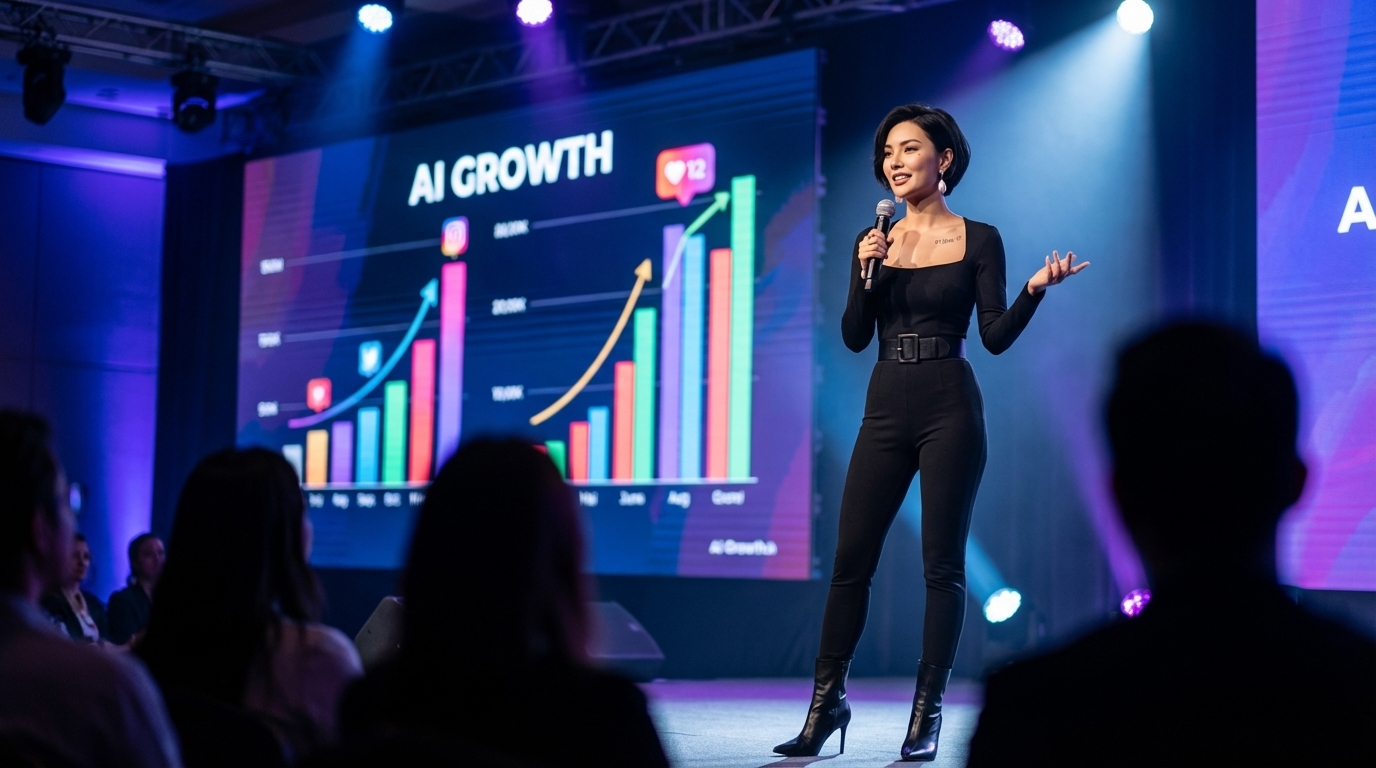
Section takeaway: Thirty days of consistent posting generates enough signal to confirm or redirect. Look for engagement quality, growth trajectory, and commercial intent — not just view counts.
Case Study Examples of Profitable AI Influencer Niches
Understanding how AI creator niche validation plays out in practice calibrates expectations and sharpens positioning decisions before launch.
Micro niche authority growth example
A virtual AI character positioned as a specialist in minimalist productivity for remote workers — a clearly defined sub-niche within the broader productivity category — can reach 15,000 followers within four months through highly specific, highly saveable content. The audience is smaller but deeply engaged, and brand partnerships with productivity software companies become attainable at this scale because of audience specificity.
Key insight: a tightly defined audience with strong engagement consistently outperforms a larger, disengaged audience for monetisation purposes.
Viral entertainment niche scaling case
An AI character in the gaming entertainment space using trending audio, commentary formats, and reaction-style content can achieve rapid follower growth through algorithmic reach. The trade-off is lower engagement depth and reduced brand partnership rates. Entertainment niches are best paired with platform creator fund monetisation and high-volume digital product strategies rather than premium brand deals.
Educational niche monetisation success
An AI influencer account delivering daily single-concept finance education posts — each Reel covering one principle in under 60 seconds — generates strong save rates, high follower loyalty, and consistent inbound enquiries from fintech brands and financial education companies. Educational niches reward engagement depth over breadth, making them well-suited to digital product launches and premium brand partnerships.
Common Mistakes When Choosing AI Influencer Niches
Avoiding the most frequent errors in AI influencer niche strategy is as important as making the right choice in the first place.
Following trends without strategy
Trend-chasing produces content that is timely but not sustainable. An account built on a specific viral trend has no strategic foundation once the trend fades. Build on a topic category with enduring audience demand, and use trends as a tactical layer on top of that foundation — not as the foundation itself.
Choosing niches with low brand demand
A niche can have a large, passionate audience and still offer limited monetisation if brands do not actively spend in that category. Before committing, verify that recognisable brands are running influencer campaigns in the space. Low brand demand means revenue must come entirely from creator-owned products — viable, but a more difficult path for early-stage accounts.
Ignoring analytics feedback
Many creators select a niche and then refuse to reassess regardless of performance data. A structured 90-day review — comparing follower growth, engagement benchmarks, and monetisation progress against targets — is essential. Analytics are not a threat to creative vision. They are the most reliable signal of what the audience actually values.
Frequently Asked Questions
What is the most profitable AI influencer niche?
Finance, beauty, and health consistently rank as the highest-earning niches based on brand advertising budgets and audience purchasing behaviour. Within each category, sub-niches with specific positioning — personal budgeting, skincare education, women’s strength training — often outperform broad category accounts because of stronger engagement profiles and higher brand relevance.
Should beginners start with broad or micro niches?
Micro niches are almost always the better starting point. A specific angle within a broader category — “minimalist home workouts for new mothers” rather than “fitness” — gives the algorithm a clearer classification signal, attracts a more engaged audience, and makes the account more attractive to relevant brands. Creators can expand their scope over time once a strong foundation exists.
How long to test a niche before switching?
A minimum of 30 days with consistent daily posting is the standard validation window. If growth and engagement remain significantly below expected benchmarks after 60 days, it is appropriate to reassess positioning or content angle. Switching before the 30-day window closes means abandoning data before it has time to accumulate meaningfully.
Can AI influencers succeed in saturated markets?
Yes — with the right angle. Saturation indicates proven audience demand, which is a positive signal. The challenge in a saturated market is differentiation: a specific visual style, unique character personality, or more targeted sub-niche can establish a new account within a crowded category. Accounts that replicate what already exists will struggle. Accounts that add a distinct perspective will find their audience.
Conclusion — Choosing a Direction That Scales
Selecting the right direction is not a creative guess — it is a strategic decision with measurable inputs and predictable outputs. The most successful AI influencer accounts in 2026 are built on AI influencer niche ideas chosen through structured analysis: demand research, profitability evaluation, content feasibility assessment, and 30-day market validation.
The creators who grow fastest are not always those who produce the most content. They are the ones who identified the right niche before their first post — and then built a system that compounded that positioning advantage over time. Use the frameworks in this guide to make that decision with confidence, and pair it with a complete AI influencer growth system to execute from a position of strategic clarity.
Continue Learning
Explore the full AI influencer strategy ecosystem:
- 📘 How to Become an AI Influencer in 2026 — The complete beginner roadmap from concept to launch
- 📈 AI Influencer Growth System — Build a repeatable, scalable growth engine from day one
- 🗂️ AI Influencer Content Pillar Strategy — Structure your content for algorithmic consistency and audience depth
- ⏱️ AI Influencer Growth Timeline — Set realistic expectations for follower milestones at every stage
- 💰 AI Influencer Income Streams — Discover how niche choice directly impacts monetisation potential