The most enduring form of influence an AI influencer can build is a cultural movement. A movement is what happens when a community stops being an audience and starts being an identity — when followers stop consuming content and start belonging to something larger than any individual post.
AI influencer cultural movement strategy is the systematic architecture for engineering that transition: from account to community, from community to tribe, from tribe to self-sustaining cultural force. Movements generate organic virality that no paid distribution can replicate, loyalty that survives algorithm changes, and commercial leverage that compounds independently of follower count growth.
This guide provides a complete framework for building community-led mass influence — tribal identity systems, ritual formation, decentralised advocacy networks, meme culture integration, movement governance, and monetisation architecture. It represents the highest-order strategic layer in the long term growth roadmap — the layer where content strategy gives way to culture architecture.
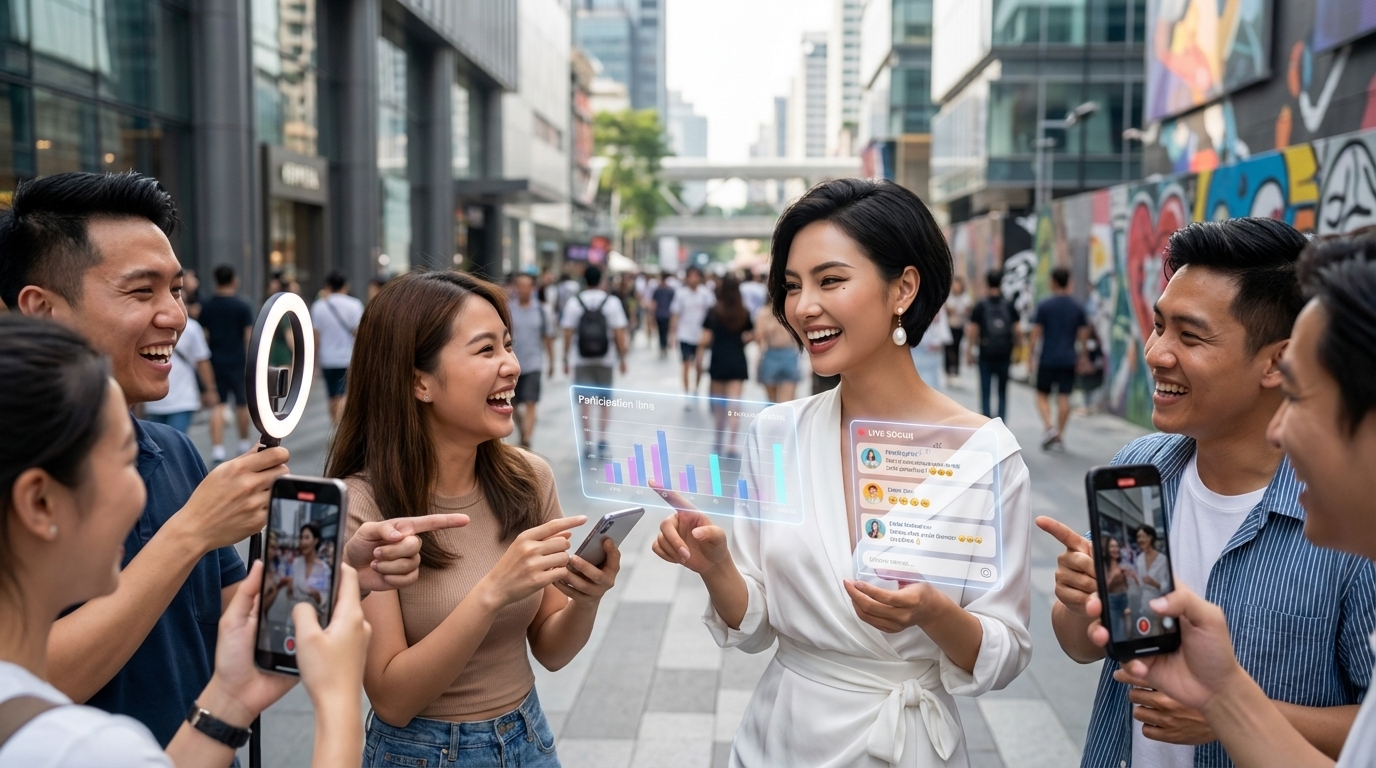
AI Influencer Cultural Movement Strategy (Strategic Overview)
A cultural movement is distinguished from a community by one defining characteristic: self-sustaining momentum. Communities require continuous creator input. Movements generate their own energy — members recruit new members, create content independently, defend the brand in cultural discourse, and build infrastructure the creator did not initiate.
Why community-led influence strengthens long-term brand resilience
Standard accounts are vulnerable to algorithm changes, platform shifts, and brand deal volatility because their growth depends on continuous creator output and algorithmic favour.
Movements distribute that dependency. When a community generates its own content, defends its own culture, and recruits its own members, the creator’s output becomes one input among many — rather than the sole source of forward momentum. This is the resilience architecture that separates enduring brands from accounts that plateau.
The foundation for movement resilience is established through the global authority framework — the credibility infrastructure that gives the community something worth belonging to.
How cultural movements generate organic virality and audience expansion
Movement virality operates through peer-level social proof rather than algorithmic distribution. A community member who shares content is not just sharing a post — they are making a statement about their own identity.
This peer-level social proof carries significantly more conversion weight than standard discovery. A new follower who arrives because a peer explicitly recommended the community arrives with pre-existing trust and a higher probability of becoming a genuine community member.
Core principles for building decentralised fan ecosystems
Three foundational principles define effective cultural movements:
- Identity before content — The community must know what it stands for before it can grow around it. Content expresses identity; it does not create it.
- Participation over consumption — Movements require audiences to do something, not just watch something. Participation creates investment; consumption creates passivity.
- Peer authority alongside creator authority — The most resilient movements distribute recognition and leadership, not concentrating it exclusively in the creator figure.
Section takeaway: The defining distinction between a community and a movement is self-sustaining momentum. Build the identity infrastructure before the content volume — not the other way around.
Tribal Identity Engineering and Shared Value Systems
Tribes are not formed by content — they are formed by shared identity. Before rituals, governance, or monetisation, the movement must know what it believes in, what it stands against, and what belonging to it says about the people who are part of it.
Defining symbolic narratives that unite community members
A symbolic narrative gives the community a story to be part of — collective purpose, shared mission, and cultural identity that transcends any individual content release.
Symbolic narrative design elements:
- Origin story — Why this community exists, what it was created in response to
- Collective mission — What the community is working toward together
- Cultural opposition — What the community defines itself against (the conventional thinking it challenges)
- Shared identity markers — Specific values, aesthetic sensibilities, or worldviews members consciously identify with
These elements become the cultural DNA of the movement — referenced in content, adopted in member communications, and used to evaluate whether new content or directions are “us” or “not us.”
Aligning brand messaging with collective audience aspirations
The most powerful movements reflect their members’ aspirations back at them. The community does not simply admire the creator — it sees in the creator a version of what the community itself aspires to become.
Aspiration alignment framework:
- Research the shared goals, values, and anxieties of the core audience segment
- Identify the specific aspirational identity the audience is moving toward
- Position the community as the vehicle for achieving that aspiration
- Validate alignment through community response signals: save rates on identity content, organic adoption of brand language
Strengthening belonging through consistent identity signals
Belonging is reinforced through repetition. Identity signals — visual language, community vocabulary, recurring themes, and shared references — must appear consistently to become genuinely adopted.
Consistent identity signal infrastructure:
- Community-specific terminology that becomes shorthand for shared values
- Visual aesthetic markers that make community members recognisable to each other
- Recurring content formats that function as cultural touchstones
- Explicit values affirmations embedded in content — not just implicit in tone
Section takeaway: Tribal identity is engineered through narrative, aspiration alignment, and repetition of identity signals — not through follower growth. Define the identity before scaling the community.
Ritual Formation and Participatory Engagement Frameworks
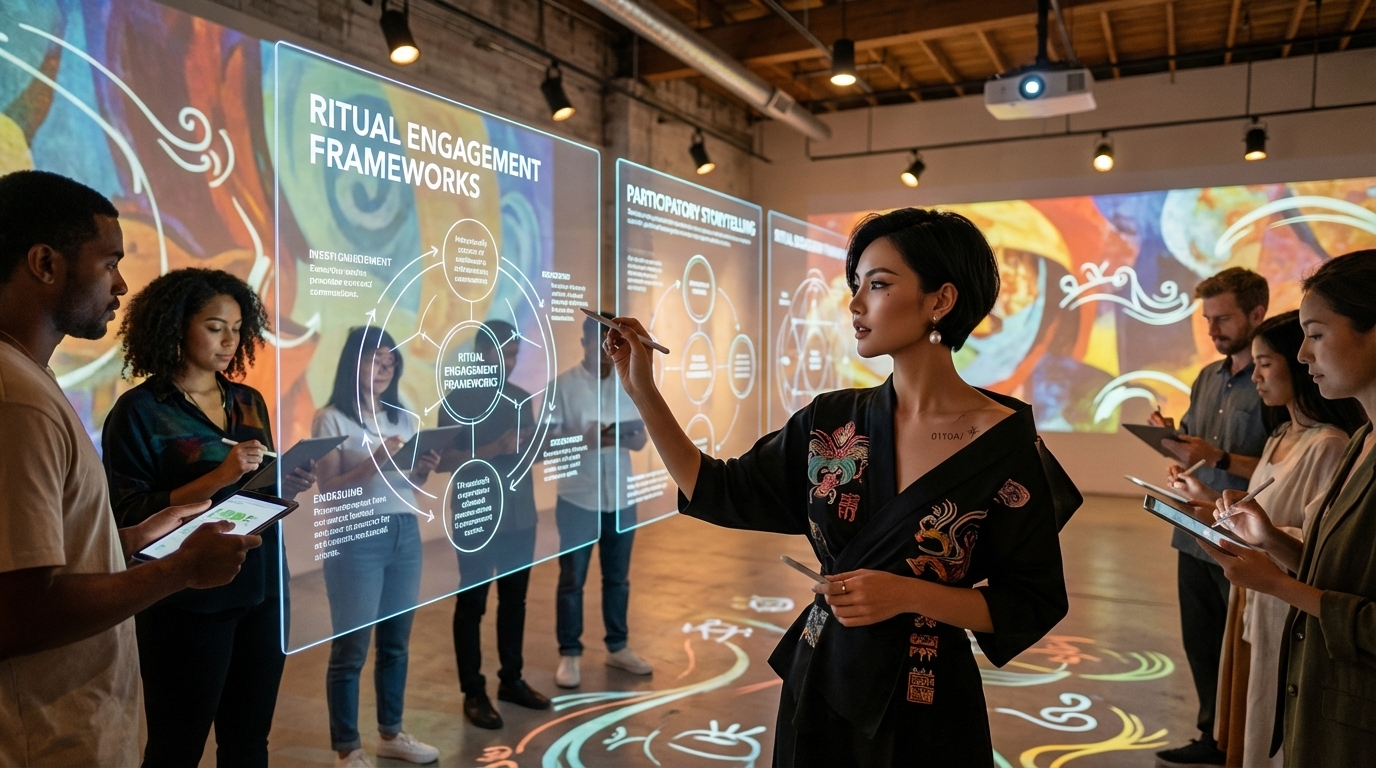
Rituals convert abstract shared values into concrete, recurring experiences that community members participate in together — creating the shared history that deepens belonging over time. A strong community building system provides the structural foundation for designing and scaling these participation frameworks.
Designing recurring activities that encourage audience participation
Effective rituals are predictable (the community knows they are coming), participatory (members do something, not just watch), and meaningful (participation reinforces shared identity).
Participation ritual formats:
- Weekly challenge formats — Community members create content within a defined theme, with featured recognition for contributions
- Community Q&A and creator response cycles — Predictable windows where the creator directly engages with community perspectives
- Collective decision moments — Points where the community genuinely influences content, character development, or brand direction
- Milestone celebration events — Community-wide acknowledgements of shared achievements and anniversary moments
Using content traditions to reinforce emotional connection
Content traditions are recurring formats that acquire meaning through repetition. A weekly series, a monthly character update, or an annual reflection piece becomes culturally significant not because of individual quality — but because its consistent return signals continuity and commitment.
Traditions create anticipation. Their arrival triggers a collective recognition response that reinforces shared membership.
Scaling ritual-based engagement across multiple platforms
As movements scale, rituals must adapt to function across multiple platform communities simultaneously.
Cross-platform ritual scaling framework:
- Core ritual format defined for the primary platform where community density is highest
- Platform-specific adaptations developed for each secondary platform
- Cross-platform participation moments designed to generate interaction between platform communities
- Community coordination infrastructure (Discord, Circle) serving as the cross-platform gathering point
Section takeaway: Rituals convert identity into lived community experience. Design them for predictability and participation — and build cross-platform infrastructure before the community outgrows a single platform.
Decentralised Evangelist Networks and Advocacy Growth Systems
The most powerful growth mechanism available to a cultural movement is its own members. When community members actively recruit, create, and advocate without being directed to do so, the movement’s reach multiplies beyond what any creator output strategy can match. According to community influence benchmarks, peer-referred community members demonstrate significantly higher engagement rates and longer retention than algorithmically acquired followers.
Empowering loyal fans to act as brand ambassadors
Empowerment requires giving community members the tools, identity reinforcement, and recognition that makes advocacy feel like self-expression rather than promotion.
Fan ambassador empowerment system:
- Provide shareable assets — branded templates, quote graphics, community visual language — that make participation frictionless
- Create clear community values documentation ambassadors can reference in advocacy conversations
- Design recognition events where community advocacy is celebrated publicly within the community
- Establish defined community roles (moderators, featured contributors, community leads) giving highly invested members formal standing
Building structured recognition programmes for community contributors
Recognition is the primary currency of community contribution. Members who receive visible acknowledgement contribute again — and the public visibility of that recognition signals to others that contribution is valued.
Recognition programme architecture:
- Featured community member spotlights — Regular features of particularly active or insightful members
- Contribution ranking systems — Transparent tracking of participation with visible status signals
- Creator direct recognition — The creator personally acknowledging outstanding contributions in content and community platforms
- Achievement milestones — Member progression through defined recognition tiers based on contribution depth
Creating peer-driven promotion loops that accelerate reach
Peer promotion loop design:
- Community member creates content within the movement’s cultural framework
- Creator or community platform features the contribution with direct recognition
- Featured contributor’s network discovers the community through the recognition event
- New members enter the community and begin their own contribution cycle
- The loop repeats at increasing scale with each cycle
Section takeaway: Peer advocacy is the highest-ROI growth mechanism in movement building. Build the recognition infrastructure that makes advocacy feel like identity — not obligation.
Meme Dynamics and Viral Culture Integration Strategies
Memes are the primary communication currency of digital culture. At the cultural movement level, they are not just entertainment — they are identity markers, in-group signals, and distribution mechanisms that extend the movement’s reach beyond its core audience.
Designing shareable cultural references aligned with community humour
Effective movement memes are internally legible (the in-group understands the reference immediately), externally intriguing (non-members find them interesting enough to investigate), and identity-expressive (sharing them communicates something about the sharer).
Movement meme design principles:
- Root references in established community narrative elements — archetypes, running jokes, shared history
- Ensure references are accessible enough to be understood by adjacent communities
- Design for identity alignment — sharing the meme should feel like self-expression
- Leave interpretive space — the most effective memes invite community adaptation and remixing
Leveraging trend timing to amplify movement visibility
When movement content intersects with a trending cultural moment, algorithmic and organic distribution dynamics multiply. The trend provides discovery access; the movement’s perspective provides the identity differentiation that converts discovery into sustained interest.
The approach: monitor trend emergence signals, identify the subset intersecting with the movement’s positioning, and create participation content at the emergence phase — not at saturation.
Maintaining narrative coherence within rapidly evolving meme cycles
Meme participation filtering criteria:
- Does this format allow expression of the movement’s core values?
- Does participation reinforce or dilute the character’s established narrative?
- Does the meme’s cultural associations align with the movement’s positioning?
- Does timing signal cultural leadership (emergence) or trend-chasing (saturation)?
Participating in every meme cycle without narrative filtering generates engagement but erodes the identity coherence that makes the community distinctive.
Movement Governance and Scalable Community Coordination
As movements scale beyond thousands of members, informal coordination becomes insufficient. Governance infrastructure — leadership structures, moderation systems, and coordination mechanisms — must be deliberately designed before it is urgently needed.
Establishing leadership structures within large fan ecosystems
Distributed leadership reduces the movement’s dependence on the creator as the sole authority. Community leaders extend coordination capacity and create multiple points of community ownership.
Community leadership tier structure:
- Tier 1 — Core team — Directly appointed; responsible for strategy alignment and high-level moderation
- Tier 2 — Community moderators — Elected or appointed; responsible for day-to-day platform coordination
- Tier 3 — Recognised contributors — Members with visible contribution records and earned authority
- General membership — Broader community with access to rituals, content, and community resources
Creating moderation systems that preserve cultural alignment
Moderation at scale is not just about removing harmful content — it is about actively maintaining the cultural identity that makes the movement distinctive.
Cultural moderation framework:
- Explicit community values document that all members acknowledge on joining
- Content standards aligned with the movement’s narrative identity
- Escalation pathways for moderation decisions requiring creator-level input
- Regular community culture audits assessing whether organic content still reflects movement values
Using analytics insights to guide movement evolution
Movement analytics focus on participation quality rather than engagement quantity.
Movement health analytics priorities:
- Community contribution rate: percentage of members who create content vs passively consume
- Advocacy conversion rate: percentage of community members who refer new members
- Cultural alignment score: quality assessment of community-generated content against movement values
- Leadership development metric: rate at which new members progress into leadership roles
Section takeaway: Governance infrastructure protects cultural identity at scale. Build the leadership tier structure and moderation systems before the community outgrows informal coordination.
Cultural Flashpoint Activation and Momentum Acceleration Models
Cultural flashpoints are concentrated moments of high-visibility community activity that generate disproportionate awareness — because the community, not the creator, is doing most of the distribution work.
Coordinating campaigns that capture public attention and social relevance
A flashpoint campaign coordinates simultaneous community action around a shared theme, event, or moment — creating density of activity that generates press interest, algorithmic priority, and peer-level social proof simultaneously.
Flashpoint campaign design:
- Define the campaign moment: a character milestone, cultural event, or values-aligned social moment
- Create participation assets: templates, content prompts, and shareable materials making community participation frictionless
- Establish a coordination window: a defined 24–72 hour period of intensified community activity
- Design recognition infrastructure: how contributions during the flashpoint will be acknowledged and featured
Aligning movement messaging with global cultural conversations
Flashpoints generate maximum impact when they intersect with existing cultural conversations already generating broad attention. The movement provides a distinctive perspective — making participation both highly visible and clearly differentiated from the crowd.
Scaling impact through synchronised content initiatives
Synchronised initiatives coordinate creator output, community content, media pitches, and cross-platform distribution simultaneously — creating the perception of coordinated cultural presence that makes the movement appear significantly larger than any individual metric would suggest.
Self-Sustaining Virality Loops and Ecosystem Growth Flywheels
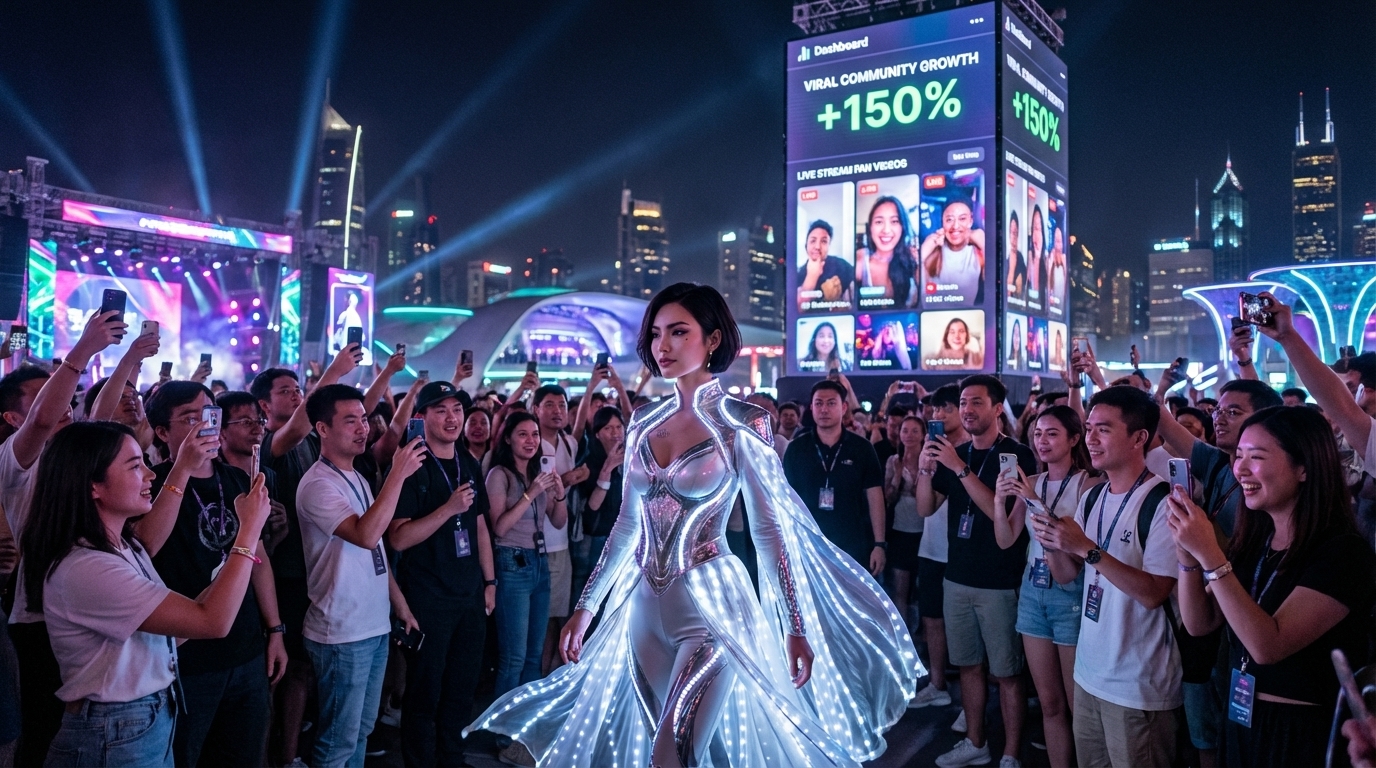
The goal of cultural movement strategy is a virality system that operates independently of continuous creator input — growing through community mechanics rather than creator output volume. According to viral growth insights, creator communities with structured participation systems sustain significantly higher organic growth rates than those relying on creator output alone.
Designing feedback systems that encourage continuous content sharing
Virality feedback loop architecture:
- Community content sharing generates public recognition within the community platform
- Recognition increases the sharer’s status within the community hierarchy
- Elevated status increases motivation to create and share further
- Each sharing event extends the movement’s reach into the sharer’s network
- New network members discover the community and enter their own contribution cycle
Integrating platform distribution strategies for maximum exposure
| Platform Type | Function | Content Role |
|---|---|---|
| Primary platform (highest density) | Deep community interaction | Long-form and community content |
| Discovery platforms (TikTok, Reels) | Audience acquisition | Short-form community-generated content |
| Authority platforms (YouTube, newsletter) | Trust and narrative depth | Long-form values reinforcement |
| Coordination platforms (Discord, Circle) | Community organisation | Direct member communication |
Content is deliberately designed to move audiences from discovery platforms to coordination platforms — where genuine community membership forms.
Leveraging analytics dashboards to optimise movement momentum
Leading movement momentum indicators:
- Weekly new community contributor count (not just new follower count)
- Community-generated content volume as percentage of total movement content
- Cross-community mention rate: frequency of movement references in adjacent communities
- Inbound media mention rate: how often the movement generates organic press interest without active PR outreach
Section takeaway: Self-sustaining virality is the structural goal of cultural movement building. Design the feedback loops, the cross-platform distribution system, and the leading momentum metrics from the start.
Icon Integration and Authority Reinforcement Through Community Power
The creator’s role within a cultural movement is not simply content producer — it is symbolic focal point. The creator embodies the movement’s values in a way that gives the community a living representation of what it stands for. The digital fame positioning that celebrity strategy builds becomes the symbolic authority that movement membership is gathered around.
Positioning influencer identity as a symbolic focal point of the movement
The creator’s authority within the movement is symbolic, not positional. The community follows the creator not because they own the account, but because they most completely embody the values and identity the community has gathered around.
This distinction matters for longevity. Positional authority collapses if the creator steps back. Symbolic authority is transferable — the community sustains its identity and momentum even during reduced creator output, because the values and narrative exist independently of any single content cycle.
Strengthening loyalty through narrative-driven leadership signals
Effective leadership signal types:
- Values demonstration moments — Public decisions or content demonstrating the creator’s principles in action
- Community acknowledgement rituals — Regular, visible recognition of community contribution
- Vulnerability and evolution signals — Moments where the creator acknowledges growth or change within the established narrative arc
- Movement direction communication — Transparent communication about where the movement is heading and why
Balancing decentralisation with clear brand direction
Decentralise participation and recognition. Centralise values and narrative direction.
Community members create freely within the movement’s cultural framework. The definition of that framework remains the creator’s responsibility to maintain and communicate. This resolution manages the core tension between genuine community ownership and the narrative coherence that makes the movement distinctive.
Movement Monetisation and Sustainable Growth Architectures
Cultural movements create monetisation opportunities qualitatively different from standard influencer income — because movement members do not simply purchase products, they invest in the continuation of the culture they are part of. A complete community revenue architecture maps these opportunities to the specific community dynamics and growth stage of each movement.
Building revenue systems aligned with community values
Movement monetisation fails when it contradicts the values that created the community. Members who feel commercialisation exploits their belonging rather than serves it withdraw engagement.
Values-aligned revenue principles:
- Revenue products must serve the community’s interests, not extract from them
- Partnership brands must align with movement values — not just the creator’s aesthetic
- Monetisation transparency is a trust signal — opacity erodes community confidence
- Community input on major commercial decisions reinforces the movement’s participatory identity
Designing membership, merchandise, and partnership models
| Revenue Format | Movement Function | Community Value |
|---|---|---|
| Tiered membership | Funds movement infrastructure | Exclusive access and recognition |
| Community merchandise | Identity expression | Physical belonging markers |
| Co-created products | Community participation revenue | Shared ownership experience |
| Brand partnerships | Commercial sustainability | Values-aligned cultural association |
| Events and experiences | Community gathering rituals | Collective memory creation |
Forecasting long-term growth through structured engagement metrics
Engagement-based revenue forecasting benchmarks:
- Active community contributor percentage — target: 15–25% of total membership
- Membership product conversion rate — benchmark: 8–15% of active contributors
- Merchandise purchase repeat rate — benchmark: 35–50% annually in strong movements
- Event attendance as percentage of community membership — benchmark: 5–10% per event
Common Mistakes in Cultural Movement Building
The most damaging errors in movement building are identity failures — they erode the community’s sense of what the movement stands for.
Forcing participation instead of fostering authentic belonging
Participation manufactured through mandatory engagement, aggressive calls-to-action, or gamified obligation produces resentful members, not advocates. Authentic belonging emerges from genuine resonance with movement values — not from mechanics that extract engagement without providing meaning.
Allowing narrative fragmentation across community segments
As movements scale, different segments develop different interpretations of the movement’s meaning. Left unmanaged, these interpretations diverge until the community is effectively several communities sharing a name — with no coherent identity to anchor growth or monetisation.
Ignoring operational infrastructure required for large-scale coordination
Cultural movements at scale are complex social organisations requiring governance systems, moderation capacity, community management infrastructure, and financial management architecture that most creator setups are not designed to support. Building this infrastructure before it is critically needed is the operational requirement for movement sustainability.
Future Trends in AI Influencer Cultural Movements
Three structural developments will shape the cultural movement landscape for AI influencers over the next five years.
AI-powered community sentiment analysis and engagement automation
Emerging tools will enable real-time monitoring of community sentiment, identification of internal culture shifts, and automated engagement prompts maintaining participation momentum between major content events. Movement governance will become data-driven at a granularity that manual monitoring cannot achieve.
Growth of decentralised creator-led cultural ecosystems
The next evolution of creator communities will be decentralised governance models — where community members have genuine decision-making authority over movement direction, product development, and cultural standards. AI influencer brands building community governance infrastructure early will lead this transition rather than adapt to it.
Integration of fan governance models into influencer business strategy
Fan governance — structured community input into commercial decisions — is moving from experimental to strategic. AI influencer brands treating community input as a genuine competitive advantage will generate stronger loyalty and higher monetisation per member than those treating governance as a community relations exercise.
Frequently Asked Questions
How do AI influencers build cultural movements?
Cultural movements are built through the systematic combination of tribal identity engineering (shared values and symbolic narrative), ritual formation (recurring participatory experiences), decentralised advocacy systems (empowered community ambassadors), and movement governance (distributed leadership infrastructure). The transition from community to movement occurs when members begin generating momentum independently — recruiting, creating, and advocating without direct creator prompting.
What makes a fan community become a cultural force?
A fan community becomes a cultural force when it develops three characteristics: a shared identity so clearly defined that membership feels like a statement about who you are, a participatory structure so embedded that members are producers as well as consumers, and a governance culture so distributed that the movement sustains momentum independent of creator output. These three conditions together produce the self-sustaining virality that defines a genuine cultural force.
How long does it take to create mass community influence?
The transition from engaged audience to proto-movement typically occurs between 12 and 24 months of consistent strategic execution, from a base of approximately 10,000–25,000 engaged followers. Mass cultural influence — where the movement generates independent press coverage, cross-platform cultural references, and self-sustaining growth — typically requires 3–5 years of compounding movement investment.
Can cultural movements increase influencer monetisation potential?
Yes — significantly and sustainably. Cultural movements generate monetisation opportunities unavailable to standard influencer accounts: community membership subscriptions, co-created merchandise with genuine cultural significance, participatory events functioning as community rituals, and brand partnerships whose value derives from cultural authority rather than standard reach metrics. Movement-based monetisation generates higher per-member revenue and longer customer lifetime value because community members invest in the movement’s continuation, not simply in a product.
Conclusion — Transforming Communities into Self-Sustaining Cultural Forces
The AI influencer cultural movement strategy outlined in this guide is the highest-order expression of AI influencer brand development — the layer at which content strategy gives way to culture architecture, audience management gives way to community governance, and individual influence gives way to collective movement.
Every framework described — tribal identity engineering, ritual formation, decentralised advocacy, meme culture integration, movement governance, flashpoint activation, virality ecosystem design, icon integration, and movement monetisation — contributes to a system that becomes more valuable, more resilient, and more commercially powerful with each cycle of consistent strategic investment.
The creators who build cultural movements do not simply have larger audiences. They have fundamentally different assets: communities that self-sustain, advocacy that self-generates, and cultural authority that compounds independently of any individual content or algorithm cycle.
Build the identity. Establish the rituals. Distribute the leadership. The result is not just a following — it is a force.
Next Step in Your AI Influencer Growth Journey
Once a cultural movement is established and self-sustaining, the next strategic layer is expanding the entire AI influencer operation into a structured, multi-channel empire — with organisational infrastructure, diversified revenue systems, and scalable brand architecture that operates at the level of a media company.
👉 Coming next: AI Influencer Digital Empire Strategy — how to transition from a single creator brand into a scalable AI influencer empire with multiple revenue pillars, operational infrastructure, and long-term commercial architecture.
Continue Learning
Explore the full AI influencer strategy ecosystem:
- 🗺️ Long Term Growth Roadmap — The complete strategic framework for building a compounding AI influencer business
- 🏆 Global Authority Framework — Build the authority infrastructure that cultural movement strategy scales from
- 🌟 Digital Fame Positioning — Engineer the celebrity dimension that gives the movement its iconic focal point
- 🤝 Community Building System — Build the foundational community infrastructure that movement strategy expands from