
A structured AI influencer global growth strategy is the architecture that converts a domestically established creator brand into a borderless enterprise — one capable of reaching new audiences, securing international partnerships, and generating diversified revenue streams across multiple national markets simultaneously. International expansion is the natural next phase after niche authority and multi-market diversification are established. At that point, the core brand identity, production system, and monetisation infrastructure are proven enough to be scaled into new geographic contexts without the foundational risk that premature expansion carries.
The challenges are real: language barriers require structured localisation systems, cultural positioning must be adapted without compromising brand coherence, and platform preferences differ significantly between regions. AI influencer accounts have a structural advantage here — Synthesia and HeyGen’s multi-language avatar capabilities, AI translation tools, and algorithmic distribution systems make global expansion achievable at solo creator scale. This guide provides the systematic framework for deploying those tools within a disciplined international expansion architecture. For the strategic staging that precedes globalisation, see our long term growth roadmap.
The globalisation framework operates across six sequential systems: market prioritisation, language localisation, cultural adaptation, platform rollout, cross-border partnership development, and global analytics. Applied in sequence and validated at each stage, they enable an AI influencer brand to enter new geographic markets with the same systematic discipline that governs niche expansion.
Global growth should usually come after brand expansion readiness. If the AI influencer has already proven that it can enter adjacent niches without losing positioning, it becomes safer to adapt the same identity across countries and languages.
AI influencer global growth strategy is the process of expanding an established AI influencer brand into international markets through market prioritisation, language localisation, cultural adaptation, regional platform strategy, cross-border partnerships, global analytics, and multi-market monetisation systems.
A strong AI influencer global growth strategy helps creators reach new audiences, reduce domestic market dependency, build international brand authority, localise content effectively, secure regional partnerships, and create diversified long-term creator income across multiple countries.
What You Will Learn in This Guide
In this AI influencer global growth strategy guide, you will learn:
- when an AI influencer brand is ready for international expansion
- how to prioritise global markets using monetisation and analytics signals
- how to localise language, captions, voice, and storytelling for new regions
- how to adapt cultural positioning without weakening brand identity
- how to build regional platform rollout systems and global content calendars
- how global growth connects to localisation, cultural positioning, brand authority, partnerships, and long-term income
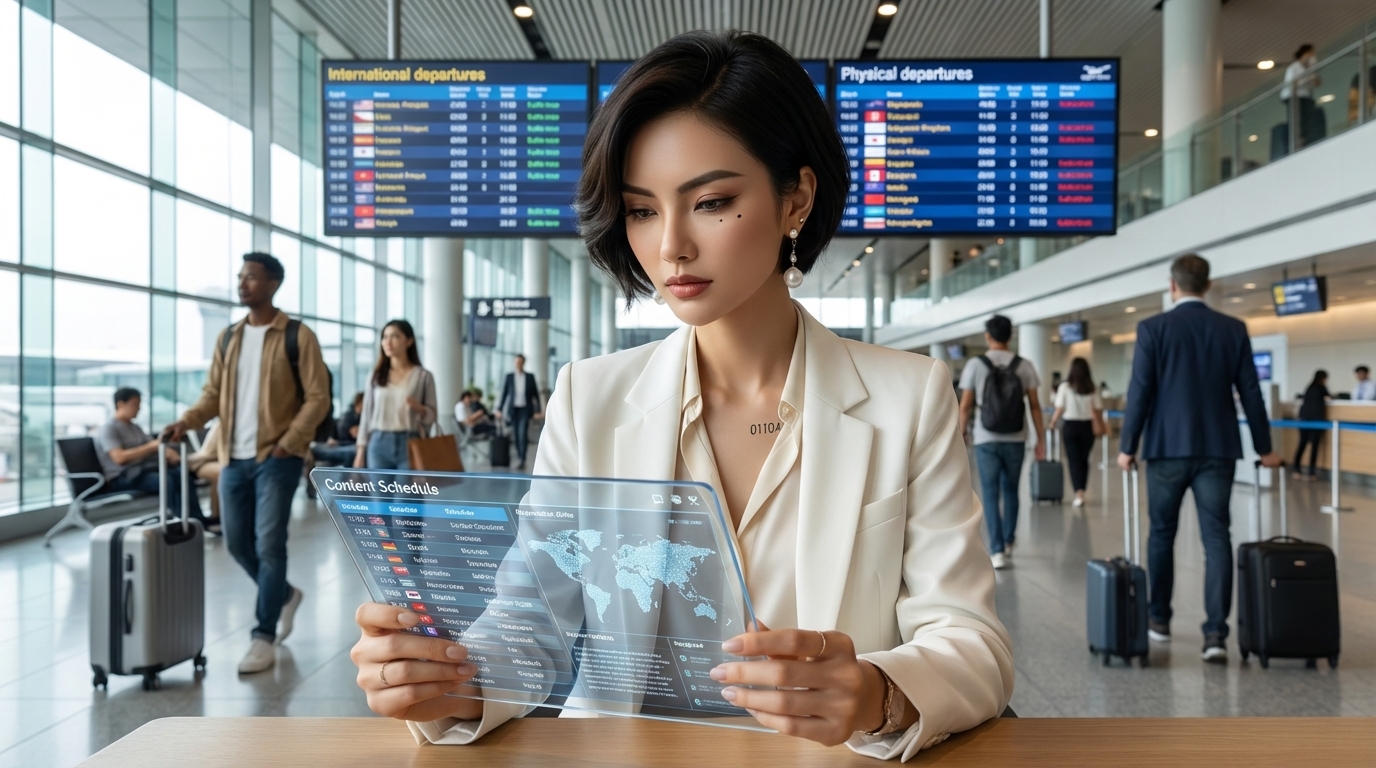
AI Influencer Global Growth Strategy: Strategic Overview
International expansion amplifies the compounding dynamics of an established AI influencer brand by accessing audience pools structurally separated from the domestic competitive landscape. A brand that has reached saturation within its domestic niche finds in international expansion an entirely fresh growth vector — new audiences who have not encountered the character, new brands seeking influencer partners, and new algorithmic systems that reward early-mover positioning in underpenetrated markets.
The goal of international expansion is not only more reach. The deeper goal is global brand authority — the ability for the same AI influencer identity to earn trust, recognition, partnerships, and cultural relevance across multiple regions.
Understanding global audience growth insights across different regional platforms makes clear why timing and market sequencing matter significantly before resources are committed.
Why Global Audience Reach Compounds Long-Term Creator Growth
International presence compounds growth through three mechanisms domestic-only accounts cannot access:
- Geographic arbitrage — some markets have significantly lower creator competition in specific niches, enabling faster audience acquisition at equivalent production investment
- 24-hour algorithmic activity — a multi-regional audience generates engagement across more of the global clock cycle, improving algorithmic distribution signals continuously
- Revenue cycle diversification — international brand partnerships often operate in different economic cycles than domestic markets, providing income stability during domestic contractions
AI influencer accounts with meaningful international audience presence consistently outperform domestically concentrated accounts of equivalent total size on engagement rate metrics — because international audiences in early discovery engage at higher rates than long-established domestic followers.
How International Diversification Reduces Market Dependency Risk
Single-country revenue concentration is a structural vulnerability. Platform algorithm changes, national economic conditions, and domestic niche saturation can significantly reduce an account’s performance in ways that have no geographic counterpart in other markets.
Risk distribution example:
An account generating 40% UK revenue, 30% US revenue, 20% Southeast Asian revenue, and 10% elsewhere is significantly more resilient than a 90% domestic account. A domestic disruption that cuts UK revenue by 30% produces only a 12% total revenue impact — a manageable disruption rather than an existential threat.
Core Principles for Cross-Border Influencer Brand Building
Four principles govern AI influencer global growth strategy execution:
- Sequential market entry — enter one new regional market fully before initiating a second
- Localisation before launch — validate language and cultural adaptations with native speaker review before committing to full posting schedules
- Platform-market alignment — select platforms based on regional user behaviour data, not domestic platform strategy applied uniformly
- Data-governed expansion gates — define measurable thresholds for each market’s pilot phase and treat them as binding decision criteria
These principles apply the same sequential validation logic that governs niche expansion systems — adapted for geographic context rather than content category context.
Market Prioritisation Frameworks for Global Rollout
The starting point of any AI influencer global growth strategy is identifying which international markets offer the highest probability of successful audience acquisition and revenue generation relative to the investment required to enter them. Market sequence determines both the speed of revenue compounding and the brand equity risks managed at each stage.
Evaluating Countries Based on Monetisation Potential
Assess each candidate market across five factors:
| Factor | What to evaluate |
|---|---|
| Creator economy maturity | Active brand sponsorship budgets and influencer marketing infrastructure |
| Social commerce adoption | Integration of social media with purchasing behaviour |
| Affiliate programme access | High-commission programmes available in the AI influencer’s niche |
| Average CPM rates | Revenue per thousand impressions vs. domestic market baseline |
| Niche competition density | Creator saturation in the AI influencer’s niche category |
Markets with high monetisation potential and lower domestic-equivalent competition represent the highest-value early entry targets — commercial returns plus first-mover positioning advantages.
Using Analytics Signals to Identify High-Growth Regions
Analytics signals already present in an established account often identify international opportunities before any deliberate expansion effort is made. Platform analytics display the geographic breakdown of followers, content reach, and engagement — providing a validated demand signal for markets where content is already resonating organically.
Prioritisation rule: target markets where organic reach already exceeds 5% of total account reach. These markets have demonstrated algorithmic affinity with the content format — localisation effort layers onto pre-existing demand rather than building from zero.
Balancing Rapid Expansion with Resource Allocation
The sustainable resource allocation model limits active simultaneous international market entries to two at any given time:
- Primary target market — receiving full localisation and production investment
- Secondary target market — receiving a pilot localisation phase at reduced investment
This prevents resource fragmentation while maintaining meaningful expansion momentum. Attempting more than two simultaneous market entries consistently produces insufficient localisation quality across all markets simultaneously.
Language Localisation Systems and Multilingual Content Strategy
Language localisation is the technical foundation of any international market entry strategy — and the area where AI influencer accounts hold their most significant production advantage. AI tools have reduced the marginal cost of multilingual content production to near-zero while improving translation accuracy and cultural nuance to levels previously achievable only with dedicated professional teams.
Global growth depends on localisation strategy, not direct translation. Each market needs adapted language, captions, hooks, cultural references, posting rhythm, CTA style, and audience expectation mapping before full-scale content rollout.
Adapting Voice, Captions, and Storytelling for Global Audiences
Effective localisation adapts the character’s voice and storytelling conventions to match the target language’s communication culture — not just its vocabulary. A caption that reads as conversational in British English may read as formal or awkward when literally translated into Brazilian Portuguese or Japanese.
Localisation checklist per target market:
- Caption register adapted to target language’s social media communication norms
- Idioms and colloquialisms replaced with culturally equivalent expressions
- Cultural references replaced with equivalents familiar to the target market
- Hashtag strategy adapted to target market discovery patterns
- CTA language adapted to regional purchasing and engagement behaviour norms
For the community engagement systems that sustain localised audiences once acquired, see our guide to AI influencer cross-cultural audience retention.
Leveraging AI Tools to Automate Multilingual Production
AI tools enable multilingual content production at solo creator scale through four automation systems:
- Avatar video localisation — HeyGen and Synthesia generate lip-synced character video in 30+ languages from a single production session
- Caption and script translation — DeepL and ChatGPT with language-specific prompting produce high-accuracy translated scripts for native speaker review
- Hashtag and keyword research — AI social listening tools identify hashtag ecosystems and search keywords used by the target market in the relevant niche
- Scheduling automation — Buffer, Later, and Metricool support time-zone-specific scheduling that publishes localised content at each market’s optimal windows without manual daily management
Production workflow: generate domestic content in English → AI translation → native speaker cultural review (monthly 2–3 hour session) → localised avatar video production → schedule full month in a single platform session.
Testing Localised Messaging Before Full Market Commitment
Pilot localised content before committing full production resources:
- Produce 10–15 localised posts for the target market
- Publish over 30 days at half the planned full-market posting frequency
- Track three indicators: engagement rate vs. domestic baseline, follower acquisition rate, and brand partnership inquiries from the target market
Decision rules:
- All three positive → proceed to full market localisation
- Engagement positive, follower acquisition below threshold → refine hashtag and discovery strategy
- Engagement below threshold → commission native speaker cultural review before extending pilot

Cultural Adaptation and Brand Positioning Across Regions
Language localisation addresses technical adaptation. Cultural adaptation addresses the deeper positioning challenge: ensuring the AI influencer character’s identity, values, and communication style resonate authentically with each target market rather than reading as foreign or generically global. For the authority positioning frameworks that maintain brand coherence across all cultural adaptations, see our guide to AI influencer global positioning strategy.
Cultural positioning determines whether an AI influencer feels relevant in a new region. The brand must understand local values, trust signals, aesthetic expectations, humour boundaries, buying behaviour, and identity cues before scaling content.
Understanding Regional Content Expectations
Regional content expectations vary significantly and are not reducible to language:
| Region | Dominant content preference | Engagement driver | Brand tone |
|---|---|---|---|
| US / UK | Educational authority, relatable personality | Save-worthy tutorials | Direct, conversational |
| Japan / South Korea | High-aesthetic, precision lifestyle | Visual perfection | Refined, detail-oriented |
| Brazil / Latin America | Emotionally resonant, community-driven | Shares, relational engagement | Warm, expressive |
| Southeast Asia | Aspirational lifestyle, practical value | Saves, product recommendations | Aspirational, accessible |
| Middle East | Luxury lifestyle, family-oriented values | High-end brand alignment | Elegant, values-aware |
Use this framework as a starting point for cultural research — audit top-performing accounts in each target niche before finalising positioning decisions.
Maintaining Core Brand Identity While Adapting Communication
Cultural adaptation adjusts surface communication elements without altering the core character identity:
What stays fixed across all regions:
- Visual aesthetic (consistent Midjourney character reference prompts)
- Core value proposition (the central transformation the character provides)
- Meta-positioning framework (niche-agnostic brand statement)
What adapts by region:
- Caption register and formality level
- Storytelling conventions and emotional register
- Cultural reference selection
- Lifestyle contexts depicted in imagery
A luxury lifestyle AI influencer maintains its aspirational visual identity across all markets while depicting the character in culturally relevant high-end contexts — a traditional Japanese tea ceremony setting, a contemporary Dubai architectural backdrop, a São Paulo rooftop terrace.
Avoiding Positioning Conflicts in Diverse Markets
Common conflict categories to review in every pilot:
- Religious sensitivity — content acceptable in secular markets may require adaptation for markets with strong religious cultural norms
- Political sensitivity — geopolitical references acceptable in one market may be controversial or prohibited in others
- Visual cultural sensitivity — colour symbolism, imagery, and symbolic elements carry different meanings across cultures
The risk management protocol: conduct a cultural sensitivity review of all pilot content with at least one native cultural reviewer per target market, focused specifically on religious, political, and symbolic content elements, before any content is published.
Platform Rollout Sequences and Geo-Targeted Publishing Systems
Platform selection for international market entry is not simply an extension of the domestic platform strategy. Platform dominance varies significantly across regions.
A global growth strategy works best when supported by a multi-platform ecosystem. Different regions may respond differently to Instagram, TikTok, YouTube Shorts, Pinterest, newsletters, blogs, or community platforms, so the rollout should be platform-market specific.
International growth requires scaling operations because each new market adds more localisation workflows, content calendars, native review steps, regional analytics, brand outreach, approval cycles, and reporting requirements.
Choosing Platforms Based on Regional User Behaviour
| Market | Primary platform | Secondary platform | Notes |
|---|---|---|---|
| US / UK / Australia | Instagram + TikTok + YouTube Shorts | Strong multi-platform creator economy | |
| Brazil | Instagram + TikTok | YouTube | Among highest global Instagram penetration |
| Japan | Instagram + YouTube | Line | TikTok growing but Instagram dominant |
| Southeast Asia | TikTok + YouTube | YouTube primary video platform in many markets | |
| Middle East | Instagram + YouTube | Snapchat | Strong Snapchat usage in Saudi Arabia and UAE |
Research current statistics for each target market at time of entry — platform dominance in developing creator economy markets changes faster than static frameworks capture.
Designing Localised Content Calendars Aligned with Time Zones
Content published at 7pm UK time reaches a Southeast Asian audience at 2–3am — well outside that market’s engagement window. Design separate localised content calendars for each active market reflecting:
- Market-specific peak engagement windows
- National holidays and major cultural observances affecting audience behaviour
- Platform-specific posting frequency norms for the target market
Buffer, Later, and Metricool all support market-specific optimal time scheduling based on geographic audience data, eliminating manual time-zone conversion from the workflow.
Scaling Distribution for Global Visibility
International distribution workflow:
- Produce domestic-market content in English
- Generate localised versions in each target language
- Publish each localised version on the market’s primary platform at market-optimal time
- Repurpose highest-performing localised content to secondary platforms 24–48 hours later
For the production infrastructure that supports this workflow at scale across multiple active markets, see our guide to operational scaling infrastructure.
Building Cross-Border Brand Partnerships and Collaboration Networks
International brand partnerships are the highest-value commercial outcome of successful AI influencer global expansion. Brands in international markets that have not yet established AI influencer creator partnerships represent a first-mover opportunity for accounts with validated regional audience presence. Tracking international collaboration trends makes clear how rapidly this opportunity window is narrowing as AI influencer adoption accelerates globally.
International partnerships need the same commercial discipline as domestic partnerships: clear positioning, regional media kits, campaign performance tracking, renewal logic, and localised reporting that brand teams can use internally. A complete brand partnership strategy connects these systems across prospecting, negotiation, delivery, reporting, and relationship development.
Securing International Sponsorships Through Strategic Positioning
Brand marketing teams in different markets respond to different credibility signals:
- US brands — prioritise engagement rate and audience demographic data
- Japanese brands — prioritise aesthetic quality and brand safety
- Brazilian brands — prioritise community engagement authenticity and cultural alignment
- Southeast Asian brands — prioritise reach metrics and product purchase intent signals
Build a market-specific media kit for each active international market leading with the credibility signals most valued by brands in that region. A consolidated global media kit is significantly less effective than a market-specific document that addresses the brand team’s local evaluation criteria directly.
Managing Global Campaign Coordination
Core coordination principles:
- Maintain separate partnership tracking documents for each active market rather than a consolidated global tracker
- Establish a single international campaign coordinator role managing cross-market scheduling conflicts
- Never accept partnerships in two different markets in the same production calendar week unless both can be fulfilled without quality compromise
Multi-market partnership overlap is the most common operational failure point for expanding accounts — accepting every inbound opportunity leads to quality-compromised deliverables that damage partnerships across all active markets simultaneously.
Accelerating Credibility Through Regional Collaborations
When an established regional creator collaborates with or mentions the AI influencer character, the credibility transfer to that regional audience is immediate and authentic in a way self-generated localised content cannot replicate. Identify two to three collaboration partners per priority market during the market research phase and prioritise outreach before the full-market production schedule begins.

Global Analytics Dashboards and Performance Optimisation Systems
Global analytics systems convert international expansion activity into strategic intelligence that governs resource allocation decisions, market prioritisation updates, and localisation quality improvements across all active markets. Without structured global analytics, multi-market expansion is driven by assumption rather than data.
Tracking Performance by Geographic Segment
Track six KPIs per active market on a weekly basis:
| KPI | What It Signals |
|---|---|
| Follower growth rate | Rate of new acquisition per week in the target market |
| Engagement rate by market | Localised content performance vs. domestic baseline |
| Save rate by market | Depth of audience value perception |
| Profile visit-to-follow conversion | Effectiveness of localised bio and content grid |
| Partnership acquisition rate | Brand market receptivity per month |
| Revenue per thousand followers | Commercial yield comparison across markets |
Metricool’s geographic segmentation analytics and Sprout Social’s international audience reporting both support this level of market-specific performance tracking within a unified dashboard.
Interpreting International Data to Refine Strategy
Performance patterns reveal specific strategy gaps:
- High follower growth, low engagement — successful discovery but insufficient localisation depth; audiences finding the account but not resonating with content
- High engagement, slow follower growth — strong content resonance but weak discovery system; hashtag, timing, or platform strategy needs refinement
Review international performance data monthly. Make one specific strategy adjustment per market per review cycle, identified by the most significant performance gap between target market metrics and the domestic market baseline.
Integrating Analytics into Long-Term Globalisation Planning
Conduct a quarterly market portfolio review — a structured assessment of all active international markets’ performance trajectories relative to investment:
- Markets exceeding thresholds → increase production investment
- Markets underperforming across two consecutive quarterly reviews → reallocate resources to higher-performing market opportunities
This quarterly review is the governance mechanism that prevents over-investment in low-return markets and under-investment in high-return markets.
Revenue Localisation and Multi-Market Monetisation Models
Revenue localisation adapts the AI influencer brand’s monetisation architecture to the commercial realities of each target market. The same revenue model that generates strong returns in a mature creator economy may be structurally inappropriate for a developing market where brand partnership budgets are smaller, affiliate programme availability is limited, and audience purchasing behaviour operates through different channels. For the full monetisation architecture framework, see our global revenue system.
Adjusting Pricing and Partnership Structures for Regional Economies
AI influencer accounts entering international markets with domestic-market pricing expectations consistently fail to build meaningful partnership pipelines where those rates significantly exceed local influencer market norms.
Recommended approach: establish a base international rate 20–40% below the domestic market rate for equivalent audience sizes, with a transparent escalation schedule that increases rates as regional audience size and engagement metrics reach defined thresholds. This positions the account as accessible for early partnership development while building toward domestic-equivalent rates as regional authority is established.
Building Diversified Income Streams by Market
Sequential income stream activation per new market:
- Affiliate marketing — activate first using regionally available programmes; lowest production overhead and most immediate passive income
- Regional brand partnerships — initiate after 90 days of localised content production with demonstrable regional engagement rate
- Localised digital products — adapt existing library for regional relevance (translated prompt libraries, culturally adapted templates, region-specific guides)
- Market-specific subscription content — viable once a loyal regional community of minimum 5,000 engaged followers is established
Forecasting Global Revenue Growth
Model three scenarios per active market:
- Conservative (25th percentile of comparable account performance)
- Base (50th percentile)
- Optimistic (75th percentile)
Calculate the expected return on investment for each market at each performance level. This scenario planning framework enables resource allocation decisions that reflect realistic probability distributions rather than single-point projections.
Common Mistakes in AI Influencer International Expansion
Entering Global Markets Without Localisation Validation
Publishing untranslated or machine-translated content directly — without native speaker review — produces grammatically correct but culturally inauthentic content that actively signals inauthenticity. This damages brand credibility faster than no localised content would have. The pilot validation protocol with native speaker review is not an optional quality step; it is a gate criterion for market entry.
Over-Scaling Geographically Without Operational Infrastructure
Attempting to maintain active production and community engagement across more international markets than the operational infrastructure can support causes content quality degradation across all markets simultaneously. Localisation accuracy declines, posting frequency becomes inconsistent, and brand partnership deliverables miss quality thresholds.
Rule: limit active simultaneous international market expansion to two markets at any given time. The compounding value of two well-executed market entries consistently exceeds the diluted value of five poorly executed ones.
Ignoring Cultural Nuance in International Brand Positioning
Colour symbolism conflicts, religious imagery deployed without cultural awareness, and political references that carry unintended implications in target markets are all failure modes a structured cultural sensitivity review prevents. The cost of a pre-launch cultural review is trivially small relative to the brand reputation damage a positioning error in an international market can produce.
Future Trends in Global AI Influencer Growth
As the AI influencer gains recognition across multiple regions, the brand begins moving from creator account to digital celebrity system — a persona with cross-market visibility, cultural recognisability, and commercial value beyond one platform or country.
AI-Driven Translation and Cultural Intelligence Platforms
AI translation is evolving from linguistic accuracy into cultural intelligence — systems that not only translate language but adapt content for cultural resonance, identify potential sensitivity conflicts, and suggest market-specific modifications before publication. These platforms will progressively reduce the human native speaker review requirement from a monthly quality check to an exception-based oversight function.
Rise of Globally Distributed Creator Collaboration Ecosystems
Distributed collaboration platforms are emerging that match creators across markets for co-produced content, shared audience development, and joint brand campaign execution — creating new international growth acceleration mechanisms for AI influencer brands willing to invest in cross-market relationship building.
Predictive International Market Entry Models
Predictive analytics platforms that model expected content performance in international markets before any production investment are moving toward creator-accessible pricing. These tools aggregate platform engagement data, creator economy intelligence, and cultural content trend analysis to produce market entry success probability scores for specific creator brand and niche combinations.
Frequently Asked Questions
How do AI influencers expand internationally?
AI influencer international expansion follows a six-phase approach: market prioritisation using monetisation potential and analytics demand signals; language localisation using AI translation validated by native speaker review; cultural adaptation of communication style and content context; platform rollout aligned with regional user behaviour data; cross-border brand partnership development through market-specific positioning; and global analytics tracking that governs ongoing investment allocation across active markets. Each phase is validated before the next is initiated.
What is the best way to localise influencer content?
Combine AI translation tools for production efficiency with native speaker cultural review for authenticity quality assurance. Use HeyGen or Synthesia for multi-language avatar video, ChatGPT with language-specific prompting for caption and script translation, and DeepL for high-accuracy text translation. Commission a monthly native speaker review session (2–3 hours) to validate cultural nuance before publishing. Never publish machine-translated content without human cultural review.
How long does global audience growth take?
From market entry to meaningful international audience presence typically takes four to eight months for markets with strong demand signals and effective localisation. The pilot validation phase takes 30–60 days. Full audience development takes a further 60–90 days to activate brand partnership interest. Revenue from international partnerships, affiliate programmes, and localised digital products typically materialises in months four to six.
Can international expansion increase influencer income?
Yes. AI influencer accounts with active presence in two or three international markets consistently generate higher total monthly revenue than equivalent domestic-only accounts. The increase comes from access to international brand partnership markets, diversified affiliate income streams from regionally available programmes, and reduced revenue volatility from distributing income risk across multiple geographic market systems.
Conclusion — Building a Borderless Creator Brand Through Strategic Expansion
A systematic AI influencer global growth strategy converts a successful domestic creator brand into a borderless enterprise with compounding international revenue, diversified audience reach, and resilient market positioning across multiple geographic contexts. The frameworks in this guide — market prioritisation, language localisation, cultural adaptation, platform rollout, cross-border partnership development, and global analytics integration — are the operational components of that conversion. Applied sequentially and validated at each stage before scaling, they produce international expansion outcomes that strengthen global brand authority rather than fragmenting the domestic identity.
The defining characteristic of sustainable international expansion is systematic validation at every decision gate. Every international market that is validated before full investment produces a more stable platform for the markets that follow. Over a 24 to 36-month horizon, this approach produces a globally diversified AI influencer enterprise with audience bases, brand partnerships, and revenue streams distributed across multiple markets — each reinforcing the others.
Continue Learning
Deepen your international AI influencer expansion knowledge with these strategic guides:
- Long-term AI influencer growth roadmap — the full strategic architecture for building toward international expansion readiness
- Niche expansion system — the multi-niche diversification frameworks that precede geographic expansion
- Global revenue system — how to structure monetisation architecture across multiple geographic markets
- Operational scaling infrastructure — the production and workflow systems that support multi-market operations at solo creator scale
Next Step in Your AI Influencer Growth Journey
The market entry, localisation, and cultural adaptation frameworks in this guide establish the foundation for sustainable international audience growth. The next stage beyond initial market entry is the systematic optimisation of localisation systems at scale — refining translation quality, cultural resonance, and regional engagement mechanics across all active markets simultaneously.
👉 Next: AI Influencer Localisation Strategy — learn how to move from basic translation to regionally resonant content through language adaptation, cultural review, local platform behaviour, regional hooks, and market-specific audience loyalty systems.
Learning how to build an AI influencer global growth strategy is one of the most important steps toward international audience expansion, stronger localisation, cross-border partnerships, global brand authority, and long-term online income.