An AI influencer is a virtual digital character created using artificial intelligence tools that produces content, builds an audience, and earns revenue like a human influencer. These AI-powered personas use tools for image generation, video creation, and content automation to operate across platforms such as Instagram, TikTok, and YouTube.
AI influencers are one of the fastest-growing categories in the creator economy. Virtual characters with millions of followers, AI-generated accounts earning five-figure brand deal revenues, and solo creators running entire influencer brands using nothing but a laptop and a focused AI toolkit — what was niche three years ago is now a legitimate, commercially viable career path with measurable growth mechanics and a playbook that any beginner can follow.
The reason beginners can compete in this space today is straightforward: the tools that previously required teams, budgets, and specialist skills are now accessible, affordable, and genuinely easy to use. AI image generators produce photorealistic character visuals from a text prompt. AI video tools animate those characters from a script. AI writing tools generate captions, scripts, and content strategies in minutes. And AI scheduling platforms distribute finished content automatically without daily manual effort.
This ultimate pillar guide covers every stage of the AI influencer journey: from choosing a niche and creating your AI avatar, to building a daily content workflow, growing across multiple platforms, monetising your audience, and scaling your production system for long-term growth. Whether you are starting from zero or looking to systematise an account you have already begun, this is the complete roadmap for how to become an AI influencer in 2026.
This guide is designed to be the most complete strategic resource on how to become an AI influencer in 2026.
What You Will Learn in This Guide
- How to choose a profitable niche and build a unique AI persona
- How to create a scalable content system using AI tools
- How to grow across multiple platforms using proven strategies
- How to monetise your audience with affiliate, brand, and product systems
- How to scale your AI influencer brand into a long-term digital asset
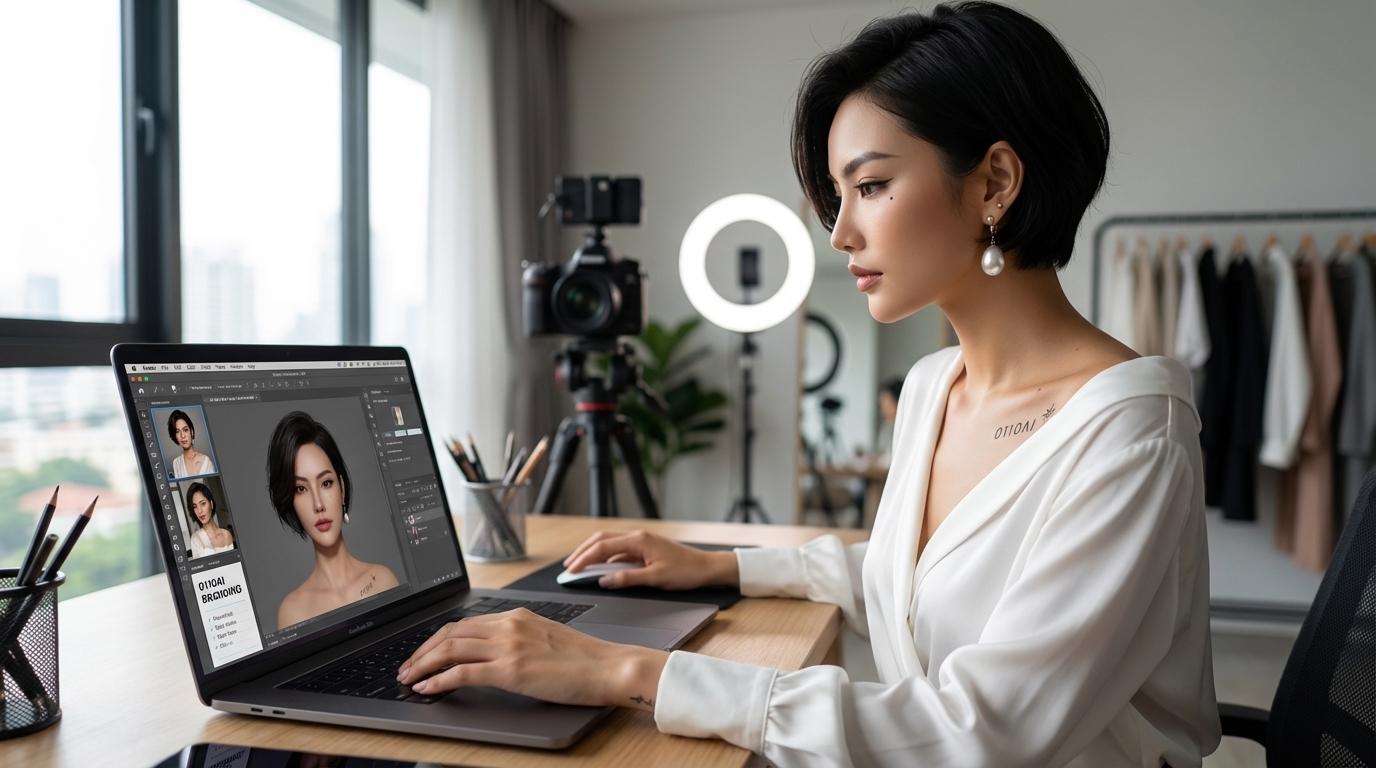
ALT: How to become an AI influencer in 2026 – complete strategic roadmap overview
The AI Influencer System Overview
Before diving into the ten steps, it is essential to understand the four core systems that underpin every successful AI influencer brand. These systems are not sequential — they operate in parallel and compound together. Understanding them at the outset helps you make better decisions at every stage.
Most beginners treat influencer building as a content problem — “what should I post today?” The most successful AI influencer creators treat it as a systems problem. They build four interconnected systems that work together to produce compounding results independent of any single piece of content.
System 1 — The Content System
The content system is your production engine. It converts your niche positioning and character identity into a consistent, high-quality output of posts, Reels, carousels, and Stories across all active platforms.
A functional content system includes: a character document that governs voice and personality across every post, a content pillar framework that structures what you publish, a batch production workflow that concentrates creation into efficient sessions, and a prompt library of reusable AI prompts that eliminate creative friction from each production cycle.
Without a content system, production is reactive, inconsistent, and limited by the creator’s daily capacity. With one, output scales without proportionally scaling effort. The AI content creation workflow for beginners maps the complete daily production system behind high-output AI influencer accounts.
System 2 — The Growth System
The growth system is your distribution and audience-building engine. It converts consistent content output into follower growth, engagement depth, and platform algorithmic amplification.
A functional growth system includes: a multi-platform distribution strategy that maximises exposure across Instagram, TikTok, and YouTube Shorts, an analytics review cadence that surfaces performance patterns and informs content decisions weekly, a community engagement protocol that builds genuine audience trust and loyalty, and an A/B testing framework that continuously improves content format performance.
The growth system is what separates accounts that publish consistently and plateau from accounts that publish consistently and compound. The AI influencer growth system provides the full strategic architecture for growth that builds on itself rather than requiring constant reinvention.
System 3 — The Monetisation System
The monetisation system is your revenue engine. It converts audience attention and trust into predictable, diversified income across multiple streams.
A functional monetisation system includes: a staged revenue activation sequence (affiliate first, sponsorships second, digital products and community third), a media kit and outreach workflow for brand partnership development, a pricing framework anchored to engagement quality rather than follower count, and a revenue tracking model that provides visibility across all active income streams.
The monetisation system ensures that audience growth translates directly into income growth — rather than producing reach without commercial return. The AI influencer monetisation strategy covers the full income architecture that high-revenue AI influencer accounts operate.
System 4 — The Authority System
The authority system is your long-term positioning engine. It converts consistent creative output and audience growth into brand credibility, market positioning, and the trust signals that command premium partnerships and sustainable community loyalty.
A functional authority system includes: a deliberate positioning strategy that differentiates your persona from competitors, a narrative identity that deepens over time and rewards long-term audience investment, a thought leadership content format that establishes expertise in your niche, and a visual identity codex that ensures brand recognition compounds with every post published.
Authority is the compounding layer that makes every other system more effective over time. The AI influencer brand authority guide maps the systematic process for building credibility that commands premium rates and enduring audience loyalty.
How the four systems connect:
| System | Primary Output | Compounding Benefit |
|---|---|---|
| Content | Consistent high-quality posts | Production efficiency increases over time |
| Growth | Follower acquisition and engagement | Algorithmic momentum builds with consistency |
| Monetisation | Diversified predictable income | Each stream compounds as audience grows |
| Authority | Credibility and positioning depth | Each partnership and post adds to the asset |
How to Navigate This Guide
If you are just starting:
→ Begin with niche, avatar, and content strategy
If you already have content:
→ Focus on growth system and analytics
If you want to monetise:
→ Jump to monetisation and scaling sections
If you want long-term brand building:
→ Explore authority and system scaling strategies
Complete Beginner Overview and Roadmap
Building a successful AI influencer brand is a ten-step process that moves through four distinct phases: foundation (niche, avatar, strategy), production (content creation workflow), growth (distribution, analytics, community), and monetisation (income streams, scaling systems). Each phase builds on the previous one, and understanding the full journey before starting helps beginners make better decisions at every stage.
The Four Progression Phases
Foundation stage (Steps 1–3): choosing your niche, creating your AI avatar and visual identity, and building your content strategy and posting system.
Production stage (Steps 4–5): automating daily content creation with AI workflows and distributing content across multiple platforms.
Growth stage (Steps 6–7): optimising content performance using analytics and building genuine community and audience trust.
Monetisation and scale stage (Steps 8–10): activating income streams, building scalable production systems, and executing a 30-day launch plan.
Essential Tools for Beginners
A complete beginner AI influencer toolkit covers six tool categories. No prior design, video editing, or coding skills are required:
- AI image generation — Midjourney or DALL·E for character imagery and scene visuals
- AI video creation — HeyGen or D-ID for avatar video; CapCut for editing and Reel production
- AI writing — ChatGPT for scripts, captions, content ideas, and character development
- Graphic design — Canva for branded templates, carousels, Stories, and Reel covers
- Scheduling — Buffer, Later, or Metricool for automated publishing and performance data
- Analytics — built into most scheduling platforms; Metricool’s free plan is the strongest no-cost option for early-stage accounts
Realistic Growth Expectations in 2026
AI influencer accounts that post consistently and apply the strategies in this guide can realistically reach:
- 1,000 followers within the first 60–90 days
- 5,000–10,000 followers by the six-month mark
- Initial brand partnership income between months six and twelve in commercially attractive niches
The accounts that underperform these benchmarks are almost always those that post inconsistently, neglect short-form video, or fail to develop a genuine character persona that audiences connect with.
Section Summary: The AI influencer journey operates across four phases and four systems simultaneously. Understanding both the phase progression and the system architecture before starting produces dramatically better strategic decisions at every step.
Step 1 — Choose a Profitable AI Influencer Niche
Your niche is the single most important strategic decision you will make as a new AI influencer. It determines your audience, your content direction, your brand partnership potential, and how quickly you grow. A clearly defined niche consistently outperforms a broad, general-interest approach in every metric that matters for creator growth.
Popular AI Influencer Niches in 2026
The most commercially active niches for AI influencer accounts combine strong audience engagement with clear brand partnership spend:
- Fashion and style — the largest AI influencer category; strong on Instagram and Pinterest; high brand deal volume from fashion, beauty, and lifestyle brands
- Technology and AI — fast-growing; strong on LinkedIn and TikTok; natural fit for software, SaaS, and consumer electronics partnerships
- Wellness and fitness — highly engaged audiences; strong on Instagram and YouTube Shorts; supplement, apparel, and app partnership opportunities
- Finance and investing — high-CPM niche with strong monetisation potential; growing rapidly on TikTok and YouTube Shorts
- Gaming and entertainment — highly engaged younger audiences; strong Twitch and TikTok presence; gaming hardware and software brand deals
- Sustainable living — emerging niche with low AI influencer competition; strong engagement from socially conscious audiences
Audience Targeting Basics
Once you have selected a niche, define your target audience with enough specificity to guide every content and caption decision. Use ChatGPT to build an audience profile: “Describe the ideal follower for an AI influencer account in [niche]. Include age range, primary platforms, content preferences, pain points, aspirations, and brands they already follow.”
A precise audience profile changes how you write captions, which trends you engage with, what time you post, and which brand partnerships you pursue.
Creating a Unique Positioning Strategy
Your account needs a positioning angle that differentiates it from existing accounts in your niche. Positioning can come from character aesthetic, perspective, content format, or tone. Use ChatGPT to audit your competitive positioning: “I want to build an AI influencer account in [niche]. Describe the most common content approaches already used in this space, then suggest three differentiated positioning angles I could own.”
Choose one positioning angle and apply it consistently from your first post. Positioning clarity is what makes early followers describe your account to others in one sentence — and that word-of-mouth description is the most reliable organic growth mechanism available to any new account.
Understanding audience psychology principles in depth helps you design a positioning angle that connects at the identity level — not just the interest level.
Step 2 — Create Your AI Avatar and Visual Identity
Your AI avatar is the face of your influencer brand. It is the first thing potential followers see, the visual anchor of every post, and the element of your brand that audiences will either remember or forget. Invest time in getting it right before creating any content.
AI Avatar Generator Tools
For character image generation, Midjourney produces the highest quality output for stylised and photorealistic imagery. DALL·E via ChatGPT offers faster iteration with strong realistic output and a lower cost of entry.
For animated video, HeyGen is the leading platform for talking-head avatar video from a script — producing natural lip-sync and consistent character performance. D-ID offers a free-tier entry point for beginners testing avatar video before committing to paid plans. Synthesia adds professional-grade avatar creation for accounts producing consistent long-form educational content.
Designing Consistent Visual Branding
Visual brand consistency is built through a system of reusable assets applied to every post. Build a brand kit in Canva: choose two to four brand colours reflecting your niche and character aesthetic, select two complementary fonts, and upload your character image as your brand logo asset. Apply this kit to every template you create — feed posts, carousels, Story graphics, and Reel cover art.
Building Character Story and Personality
A visual identity gets a follower’s attention. A character with a compelling personality keeps it. Use ChatGPT to develop a character document before producing any content: name, age range, background story, values, interests, verbal habits, recurring phrases, and a specific perspective on topics in your niche. Reference this document in every writing prompt to maintain tonal and personality consistency across all output.
The more specific and internally consistent your character document, the more convincingly your character comes across in captions and scripts. Followers who sense a real personality behind an AI influencer account engage significantly more deeply than those who experience the account as a faceless content feed.
Step 3 — Build a Clear Content Strategy and Posting System
A content strategy transforms your niche and character into a sustainable, organised production system. Without one, every content decision requires starting from scratch. With one, each week’s content follows a clear direction that builds on the previous week and accumulates into a coherent, growing brand presence.
To understand how content systems actually work in practice, this detailed guide on AI influencer content strategy and content systems breaks down the exact frameworks used by fast-growing AI influencer accounts.
Creating Content Pillars
Content pillars are the three to five core themes your account consistently publishes around. They give your feed strategic coherence, signal to the algorithm what your account is about, and make it easier for audiences to understand and follow your brand.
Use ChatGPT to develop your pillars: “I have an AI influencer account in [niche] with a [character description] persona. Suggest five content pillars with a one-sentence description and three post ideas each.”
Map each pillar to specific post formats: educational content as carousels, lifestyle posts as static images, trend engagement as Reels, community posts as Stories, and promotional content as a blend.
Planning Daily and Weekly Posting Schedules
Aim for four to five feed posts and two to three Reels per week on your primary platform during the first 90 days. Post Stories daily to maintain visibility in followers’ feeds on days without a new feed post. Plan the full week’s content in advance and schedule it in a single batching session.
A weekly content calendar in Notion or your scheduling platform’s built-in view makes the plan visible at a glance and prevents content gaps when your production session runs shorter than expected.
Balancing Entertainment and Value Content
The most effective AI influencer content calendars balance three content types:
- Value content (50%) — educational or practical posts that followers save and share
- Entertainment content (30%) — visually engaging or personality-driven posts that attract new followers
- Community content (20%) — interactive posts that drive comments and direct engagement
Value content builds authority and saves. Entertainment content generates reach and new followers. Community content builds loyalty and engagement rate.
Section Summary: Your content strategy is the operational backbone of your AI influencer brand. Pillar-based content planning, consistent weekly scheduling, and a balanced content type mix are the three decisions that determine whether your posting cadence compounds or stagnates.
Step 4 — Automate Daily Content Creation with AI Workflows
Anyone learning how to become an AI influencer in 2026 needs a fast, repeatable production workflow as their operational foundation. A well-structured AI content workflow turns each piece of planned content from a multi-hour project into a 15–30 minute task — making it realistic for a single creator to maintain the posting frequency required for consistent algorithmic growth.
Generating Scripts and Captions with AI
For every video post, begin with a script generation prompt in ChatGPT: “Write a 30-second script for a [platform] Reel about [topic] for [audience]. Character voice: [voice description]. Open with a hook in the first three seconds, deliver one clear value point, and close with a call to action.”
For captions, prompt: “Write an Instagram caption for a post about [topic] in [character name]’s voice. Include a hook opening, two to three lines of value, and a question-based call to action. Add 10 niche-relevant hashtags.” Always add one character-specific detail before finalising — a recurring phrase or personality-consistent opinion. This two-minute step dramatically improves audience connection.
Creating AI Visuals and Short-Form Videos
For static image posts, generate your character in the appropriate scene using your saved Midjourney reference prompts. For carousels, generate slide copy in ChatGPT first, then build in Canva using your brand template — each slide delivers one clear point, with the cover functioning as a swipe-triggering hook.
For Reels and TikTok videos, input your script into HeyGen or D-ID to generate the avatar video, then import into CapCut for editing.
Repurposing Content Across Multiple Platforms
Every piece of content you produce is raw material for multiple platform-specific formats. A 60-second educational Reel becomes a Twitter/X thread, a LinkedIn carousel, a blog post section, and a newsletter introduction. AI repurposing prompts make these conversions take minutes rather than hours.
After producing any long-form or high-performing content, prompt ChatGPT to convert it into three to five platform-specific formats. For the complete multi-platform production and distribution system, see the AI content creation workflow for beginners.
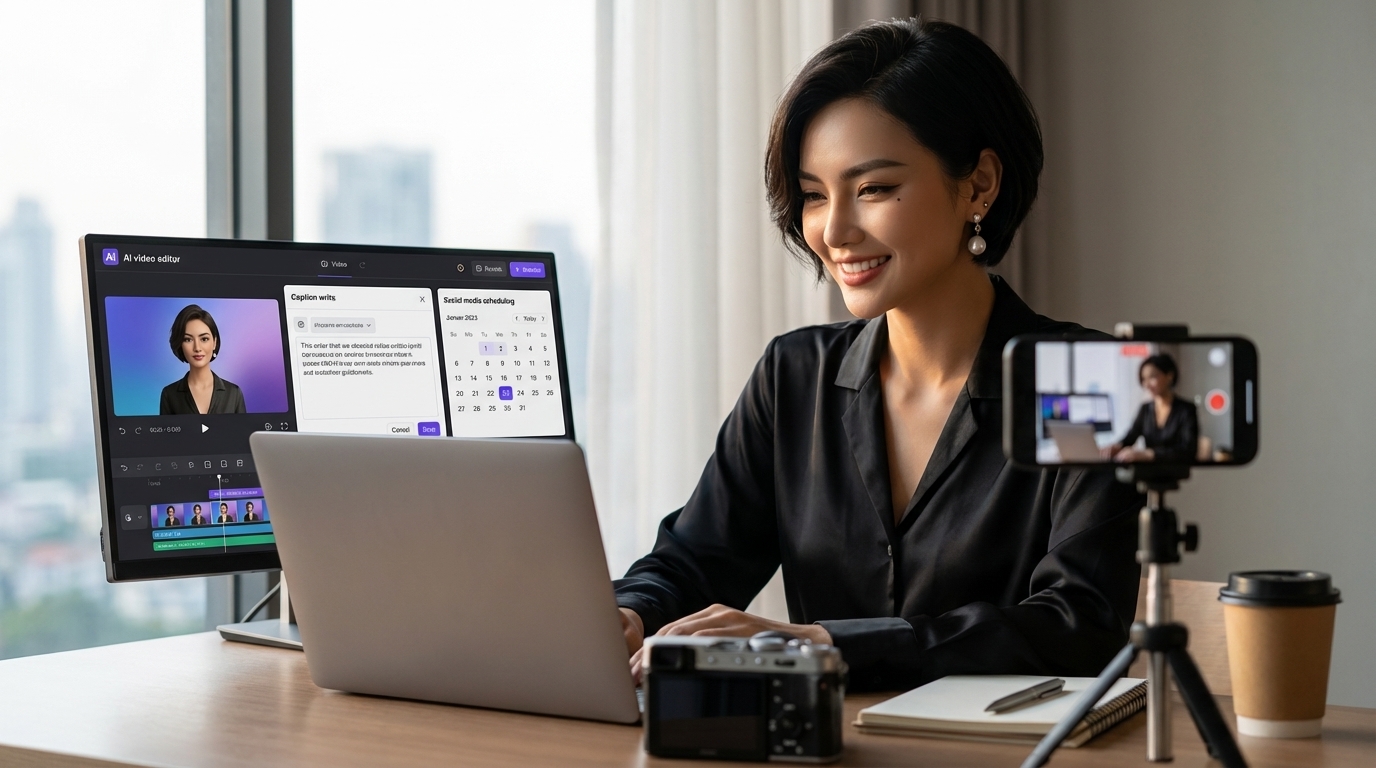
ALT: AI influencer multi-platform content production and distribution workflow system
Step 5 — Grow Faster with Multi-Platform Distribution Strategy
Building a presence on multiple platforms simultaneously multiplies exposure to new audiences and reduces dependence on any single algorithm. A multi-platform approach also enables content repurposing at scale — each piece of content can serve two to three platforms with minimal adaptation.
Instagram Discovery Fundamentals
Instagram’s discovery algorithm prioritises Reels and saves above all other engagement signals for distributing content to new audiences. The most effective strategy for AI influencer accounts on Instagram combines three to four Reels per week with regular educational carousels that earn consistent saves from existing followers.
TikTok Viral Growth Mechanics
TikTok’s algorithm is the most aggressive new-account distribution system of any major platform. New accounts with zero followers can reach hundreds of thousands of users with a single video that performs well in its first hour — a growth acceleration rate impossible on Instagram for accounts at the same follower count.
TikTok’s algorithm favours watch-through rate above all other signals. Use ChatGPT to generate multiple hook variations for every video: “Write five opening lines for a TikTok about [topic], each using a different hook type: curiosity gap, bold claim, surprising fact, direct question, and controversy.” Test each and let performance data identify which hook type works best for your specific audience.
YouTube Shorts Exposure Opportunities
YouTube Shorts offer a third algorithmic discovery channel that most AI influencer accounts underutilise. Shorts are surfaced to logged-in YouTube users who have never seen your channel, giving new accounts significant free reach from day one. The production workflow is identical to TikTok and Instagram Reels — the same AI-generated content can be published across all three with minor caption adaptations.
YouTube Shorts also benefit from lower content saturation than Instagram Reels or TikTok in most niches, meaning less competition for algorithm-driven distribution.
Section Summary: Multi-platform distribution is not about posting the same content everywhere — it is about using each platform’s distinct algorithm for a specific growth function. TikTok for discovery, Instagram for depth and saves, YouTube Shorts for long-term search-driven reach.
Step 6 — Optimise Content Performance Using Analytics
Data is the mechanism through which AI influencer accounts grow strategically rather than by chance. The analytics tools built into your scheduling platforms surface performance patterns that, acted on consistently, compound into measurable improvements in reach, engagement, and follower growth over time.
Tracking Engagement and Reach Metrics
The four metrics that most directly predict AI influencer account growth are reach rate, engagement rate, save rate, and weekly follower growth. Track all four weekly — monthly tracking is too slow to catch and correct underperformance before it compounds.
Metricool, Later, and Buffer provide all four in their dashboards. Metricool’s free plan covers each for one profile per platform, making it the strongest no-cost analytics option for early-stage accounts.
Testing Posting Formats and Timing
Every two to four weeks, introduce one new content variable and track its impact against your baseline. Test one variable at a time — caption structure, posting time, visual format, content pillar, or hook type — so that performance changes can be attributed accurately.
Posting time testing produces fast, measurable results for early-stage accounts. Once you identify the window that consistently produces the highest early engagement, lock it in and stop experimenting with timing — consistency in schedule builds audience habit and algorithm performance simultaneously.
Improving Strategy Using Data Insights
At the end of each month, export your performance data and run a ChatGPT analysis session: “Here is my social media performance data from the past four weeks: [paste data]. Identify the three strongest patterns in what drives reach and engagement, and suggest three specific changes I should prioritise in my content strategy next month.”
This AI-assisted analysis surfaces insights that raw dashboard data makes easy to miss — format-level patterns, audience behaviour differences between content types, and timing correlations that manual review would take hours to identify.
Step 7 — Build Community and Audience Trust
Reach and follower count are vanity metrics unless accompanied by genuine audience trust. Trust is what converts a follower into a loyal audience member who saves your content, shares it with their network, and buys what you recommend. It is built through character consistency, authentic storytelling, and real audience interaction.
Storytelling and Consistent Brand Personality
The AI influencer accounts with the deepest audience loyalty give their character a consistent, evolving narrative. Define your character’s values, recurring interests, and a specific perspective on topics in your niche. Then express these consistently across every caption, every script, and every post.
Introduce narrative progression over time — your character grows, changes, discovers things, and faces challenges. Reference previous posts to reward long-term followers. Build ongoing storylines within your content calendar that new viewers can follow and existing viewers feel invested in.
Encouraging Interaction and Engagement
Engagement rate is the metric that most accurately reflects real audience trust. End every caption with a specific, low-friction question that invites a one or two word answer. Use Stories polls, question boxes, and quizzes weekly. Reply to every comment during the first hour after a post goes live — this is the window when comment activity most influences algorithmic distribution.
Use ChatGPT to build a library of 50–60 engagement questions tailored to your niche and character voice: “Generate 10 Instagram caption closing questions for an AI influencer in [niche] with a [character voice]. Each should be easy to answer in one to three words.”
Creating Recognisable Visual Identity
Visual recognition is the passive form of trust-building. When every post in your feed is immediately identifiable as yours — same colour palette, same character presentation, same graphic conventions — new profile visitors understand your brand in seconds and make faster follow decisions.
Audit your visual consistency monthly by viewing your profile grid as a new visitor would. Every post should look like it belongs to the same visual family as the posts around it.
Step 8 — Monetise Your AI Influencer Brand
Monetisation for AI influencer accounts follows a three-stage progression: affiliate income first (accessible from a small but engaged audience), brand sponsorship partnerships second (requiring a proven engagement rate and niche authority), and digital product or service sales as the account scales.
Affiliate Marketing Opportunities
Affiliate marketing is the most accessible monetisation path for early-stage AI influencer accounts. It requires no minimum follower count guarantee — only a demonstrable, engaged audience in a niche relevant to the affiliate product. Accounts with as few as 500–1,000 engaged followers in commercially attractive niches can generate meaningful affiliate income from the right product partnerships.
The most productive approach is native product integration: featuring affiliate products as a natural part of the character’s content world rather than as standalone promotional posts.
Brand Sponsorship Collaborations
Brand sponsorship outreach becomes viable once your account reaches 5,000–10,000 followers with a strong engagement rate (above 3–5% for Instagram, above 5% for TikTok). Build a media kit showing your follower count, engagement rate, audience demographic breakdown, niche authority description, and three to five best-performing post examples.
Maintain a business email in your bio from your first post. Brands that discover your account organically will use it, and having it in place from the beginning signals professional intent and accelerates inbound partnership conversations as your account grows.
Selling Digital Products or Services
Digital products represent the highest-margin revenue stream for AI influencer accounts at scale. Prompt packs, content templates, niche-specific guides, AI workflow tutorials, and character design packages are all viable for creators with established authority in their niche. The production cost is minimal — AI tools handle the content creation — and revenue scales with audience size without proportionally scaling time investment.
Use your analytics data to identify your most-saved and most-shared content. The topics that earn the highest save rates are those your audience finds most valuable and is most likely to pay for in expanded, downloadable format.
Section Summary: Monetisation is a staged system, not a single activation. Affiliate income builds commercial infrastructure early. Brand partnerships scale with authority. Digital products create the highest-margin, most scalable income layer. Activate each in sequence rather than simultaneously.
Step 9 — Scale Content Production with Systems and Templates
Creators who understand how to become an AI influencer in 2026 know that scaling is only possible through systems — not through working harder or longer. The production advantage of an AI influencer workflow compounds over time, but only if you build the templates and reusable assets that allow volume to increase without degrading quality or consistency.
Batch Content Creation Workflows
Batching is the single most effective habit for scaling AI influencer production sustainably. Dedicate one to two sessions per week — 90 minutes each — to producing all content for the following five to seven days. Run all ideation, scripting, image generation, caption writing, and scheduling in a single concentrated session.
The efficiency gain from batching is significant — the cognitive overhead of opening tools and entering a production mindset is incurred once per session rather than once per post.
Prompt Libraries and Reusable Assets
A prompt library is a document of your best-performing ChatGPT, Midjourney, and HeyGen prompts, organised by content type and updated regularly. A mature prompt library eliminates the prompt-writing step from your production workflow — you select from proven prompts and fill in variables rather than writing new ones from scratch each session.
Reusable visual assets complement your prompt library: Midjourney character reference prompt sets, Canva brand templates for each content format, and CapCut editing presets for your standard Reel style. Together, these assets reduce per-post production time to its minimum and ensure that scaling volume does not come at the expense of quality or consistency.
Automation and Scheduling Tools
At the distribution layer, automation tools can handle the full publishing workflow without daily manual input. Later, Buffer, and Metricool all support automated posting for feed posts, Reels, and carousels. For multi-platform accounts, Metricool’s single-dashboard cross-platform scheduling reduces the distribution step to minutes per week.
As your account scales, SocialBee’s category-based content rotation automatically balances your content mix across pillars without manual calendar management — ensuring your feed maintains strategic variety as publishing volume increases.

ALT: AI influencer 30 day launch plan and growth milestones tracking dashboard
How to Become an AI Influencer: Complete Step-by-Step System
The most common reason new AI influencer accounts fail to gain traction is lack of structured execution in the critical first 30 days. The following week-by-week plan converts the strategy in this guide into a concrete launch sequence. Following the AI influencer growth roadmap alongside this launch plan gives you the full 12-month trajectory from first post to sustainable brand income.
Week-by-Week Launch Plan
Week 1 — Foundation: Complete Steps 1 and 2. Choose your niche, run the ChatGPT positioning analysis, create your AI character in Midjourney, develop your character document, build your Canva brand kit, and set up your scheduling platform. Do not publish any content this week — get the foundation right before anything goes live.
Week 2 — Strategy and first content batch: Complete Step 3. Develop your content pillars, build a four-week content calendar, run your first ChatGPT ideation session, and produce your first seven posts using the Step 4 workflow. Schedule all seven for Week 3. Aim to publish your first post on Monday of Week 3.
Week 3 — Launch and consistency: Go live. Publish four to five feed posts and two Reels following your scheduled calendar. Post daily Stories. Reply to every comment within the first hour. Run your second content batch to produce Week 4’s content. Do not evaluate performance yet — you need at least four weeks of data for patterns to emerge.
Week 4 — Review and refine: Run your first analytics review in Metricool. Identify which posts earned the most reach, saves, and engagement. Note the format, topic, and posting time of your top three posts. Weight Week 5’s production toward the formats and topics that performed best. Begin outreach to one to two affiliate programmes in your niche.
Daily Posting Checklist
Use the following checklist each posting day:
- [ ] Confirm the scheduled post looks correct in your scheduling platform
- [ ] Post one Story — a poll, behind-the-scenes preview, or engagement question related to the day’s feed post
- [ ] Reply to all comments from the previous 24 hours
- [ ] Check analytics for the previous post’s early performance and note any patterns
- [ ] Add one new content idea to your ideas bank if inspiration strikes
Growth Milestones and KPI Tracking
Track the following milestones to measure progress against the expected growth curve:
| Milestone | Followers | Key Performance Indicator |
|---|---|---|
| Day 30 | 100–300 | 3–5% average engagement rate, first 10 post saves |
| Day 60 | 500–1,000 | First Reel with 1,000+ views, consistent 4 posts/week |
| Day 90 | 1,000–2,500 | First viral Reel (5,000+ views), first affiliate click-throughs |
| Month 6 | 5,000–10,000 | First inbound brand inquiry, monthly affiliate income established |
| Month 12 | 15,000–30,000 | Active brand sponsorship income, first digital product launched |
Frequently Asked Questions
Can beginners become AI influencers in 2026?
Yes — and 2026 is specifically a strong entry point for beginners. Most content niches still have minimal established AI influencer competition. The tools required are accessible and largely free at the entry level. The platforms reward consistent new accounts with real algorithmic distribution. The structural barriers that made influencer building difficult in previous years — camera presence, expensive equipment, production skills — are effectively eliminated for AI influencer accounts.
The critical requirements are not technical: they are strategic clarity (a defined niche and character), production consistency (maintaining posting frequency through the slow early phase), and genuine character development (building a persona that audiences actually want to follow).
What tools are required to start?
A complete beginner AI influencer toolkit requires six tool categories, most of which are free to start: character image generation (Midjourney paid, or DALL·E via ChatGPT free tier), avatar video (D-ID free tier or HeyGen free trial), video editing (CapCut free), writing and scripting (ChatGPT free tier), graphic design (Canva strong free plan), and scheduling and analytics (Buffer or Metricool both have comprehensive free plans).
The full paid setup across all six tools costs approximately £60–80 per month — a fraction of the production cost of a comparable human influencer account.
How long does it take to grow an AI influencer account?
AI influencer accounts that post consistently typically reach 1,000 followers within 60–90 days, 5,000–10,000 followers by month six, and initial brand partnership income between months six and twelve. The first 30 days are the slowest — the algorithm distributes new accounts conservatively while building confidence in their posting reliability.
Accounts that produce regular Reel content in addition to static posts grow consistently faster than those focused only on feed images. A single Reel that performs with the algorithm can add more new followers in a week than months of static content — making short-form video the highest-leverage growth investment for any new AI influencer account.
Is monetisation possible in early stages?
Affiliate marketing is accessible from as few as 500–1,000 engaged followers in the right niche. Most affiliate programmes evaluate based on niche relevance and engagement rather than raw follower count. Brand sponsorship outreach becomes viable from around 5,000–10,000 followers with a demonstrated engagement rate. Digital product sales can begin at any audience size, provided the product directly extends the value of your most popular organic content.
Early monetisation — even at modest scale — provides reinvestment capital to upgrade tools and accelerate the production workflow as the account grows.
📚 Continue Learning: Go Deeper Into the Ecosystem
This guide is your starting point. Each section of the AI influencer journey has its own dedicated deep-dive resource covering the full strategic and operational detail. Choose your next priority:
Content System:
- AI content creation workflow for beginners — the complete daily production system for consistent high-output AI influencer accounts
Growth System:
- AI influencer growth system — the full strategic architecture for audience growth that compounds rather than plateaus
Monetisation System:
- AI influencer monetisation strategy — the complete income architecture from affiliate activation through brand partnerships to digital product scaling
Authority System:
- AI influencer brand authority — the systematic process for building brand credibility that commands premium rates and enduring audience loyalty
Audience Psychology:
- AI influencer audience psychology — how to design a positioning angle that connects at the identity level and drives deeper audience loyalty
➡️ Next Step in Your AI Influencer Journey
You have the complete foundation — the ten steps, the four systems, and the 30-day launch plan. The next stage is building the growth architecture that takes you from early traction to a sustainably expanding brand.
Coming Next: AI influencer growth roadmap — a structured 12-month trajectory that sequences every brand-building investment for maximum compounding effect, from the first 1,000 followers to the first 100,000 and beyond.
Start this week. Post before the end of the month. The AI influencer journey begins with a single post — and the earlier you make it, the faster everything that follows compounds.
Start Your AI Influencer Journey Today
Becoming an AI influencer in 2026 is no longer about experimenting with tools — it is about building a complete system that combines content, growth, monetisation, and authority into one scalable ecosystem.
By following this structured roadmap, beginners can move from zero to a fully operational AI influencer brand with predictable growth and income potential. The key is consistency, system thinking, and long-term positioning — not short-term viral content.
If you want to succeed with how to become an AI influencer, focus on building systems first. Content is only the output — the real advantage comes from the structure behind it.